Emergency Plumber in Gainesville, FL
A burst supply line at 2 a.m., a slab leak you can hear but can't find, a main drain backing up into the tub. Gainesville 24/7 Plumbing answers every call, day or night, and sends an emergency plumber to homes and businesses across Alachua County.
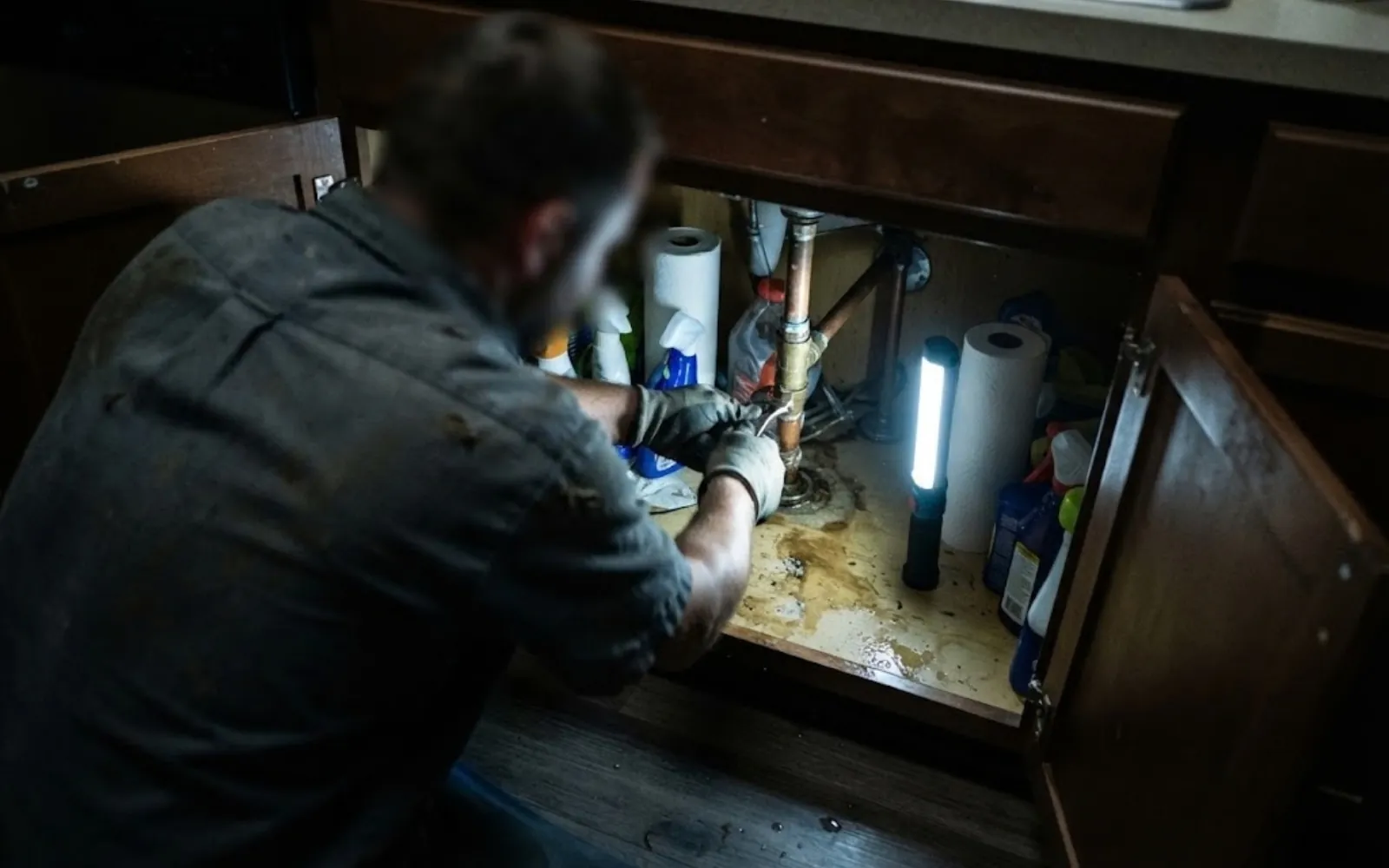
A local emergency plumber for older pipes and shifting ground
Gainesville 24/7 Plumbing is an emergency plumber and full-service plumbing company for Gainesville, FL and the towns around it. The phone line runs 24/7, so a leak at midnight gets the same response as one at noon. Most calls fall into three groups: water where it shouldn't be, drains that won't drain, and hot water that quit.
Two local conditions drive a lot of that work. Much of the city sits on limestone under a thin layer of sand, and ground movement stresses the pipes under concrete slabs. The historic neighborhoods near downtown also still carry pipe installed before 1950.
That is why finding a hidden leak and replacing worn-out supply pipe are the two jobs Gainesville homeowners search for most. Both start with a diagnosis, not a guess.
Plumbing services in Gainesville
Leak Detection
Acoustic and thermal tracing for leaks you can hear but can't see.
Repiping
Galvanized and polybutylene supply pipe replaced before it fails.
Toilet Repair & Installation
Running tanks, rocking bowls, wax rings and full replacements.
Slab Leak Detection & Repair
Leaks under the concrete, located before the floor is opened.
Drain Cleaning
Kitchen, tub and main-line clogs cleared, tree roots included.
Water Heater Repair
Tank and tankless units worn down by hard-water scale.
Need something else? The full list of our Gainesville plumbing services also covers sewer lines, gas lines, well pumps, septic systems and water treatment.
What to do in the first five minutes of a plumbing emergency
An emergency plumber can only get there so fast. What you do before the truck pulls up decides how much drywall, flooring and cabinetry you lose. Work through this list while you make the call.
- Shut off the main water valve. Most Gainesville homes have a shutoff where the supply line enters the house, often near the garage or a front hose bib. If you can't find it, say so on the phone and we'll talk you through it.
- Cut power or gas to the water heater if the tank is leaking. Flip the breaker on an electric unit. On a gas unit, turn the gas valve on the supply line to off.
- Stop using every drain if sewage is coming up. Each flush or shower adds to a main-line backup. Leave the fixtures alone until the line is cleared.
- Get valuables off the wet floor and take photos. Rugs, electronics and anything cardboard go first. Photos of the damage help with any insurance claim later.
- Smell gas? Leave first, then call. Get everyone outside, then call 911 and GRU's gas emergency line from a safe distance. Don't flip switches on the way out.
Then call us and describe what's leaking and where. You'll hear what to expect before anyone is dispatched.
Why slab leaks run high in Gainesville, by part of town
Alachua County is split by the Cody Scarp, an old marine shoreline. To the northeast, clay of the Hawthorn Group covers the limestone. To the southwest, erosion stripped that clay away, and the Ocala Limestone sits just a few feet under the sand.
Both conditions move pipes, in different ways. Knowing which one sits under your house tells a plumber where to look first, which saves time and saves concrete.
| Part of town | What's under the house | What it does to pipes | Where we check first |
|---|---|---|---|
| Northwest, around Millhopper Road. | Thin sand over shallow limestone. | Soil can settle into voids and bend lines under the slab. | Supply lines under the slab and the yard service line. |
| Southwest: Haile Plantation, Archer Road corridor, Jonesville. | Sand over shallow limestone. | Settlement at slab edges and along buried yard lines. | Slab perimeter and the line from the meter. |
| East Gainesville, toward Hawthorne. | Thicker clay cover. | Clay swells when wet and shrinks when dry, flexing the slab. | Drain lines and supply stubs where they pass through the slab. |
| Duckpond, Pleasant Street, University Heights. | Older lots, many homes built before 1950. | Pipe age matters more than soil here. | Galvanized supply, cast iron drains, clay sewer laterals. |
None of this means a house is headed for a sinkhole. It means a leak under a Gainesville slab often has a cause in the ground, and the repair should account for it. Slab homes built from the 1960s through the 1980s carry the highest under-slab leak risk locally.
That is why our slab leak detection and repair work starts with a pressure test and electronic locating before any concrete is cut. If the leak turns out to be in the yard, the job becomes a main water line repair instead, which is usually simpler.
From the phone call to a finished repair
You call
Describe the problem and where it is. You get an arrival window on the phone.
Stop the damage
On an emergency call, stopping water, sewage or gas comes first. Repairs come second.
Price before work
You hear the diagnosis and a firm price before work starts. Non-emergency estimates are free.
Walkthrough
We show you what failed and what was fixed, so you know what to watch for next.
Gainesville water and older homes: what they do to plumbing
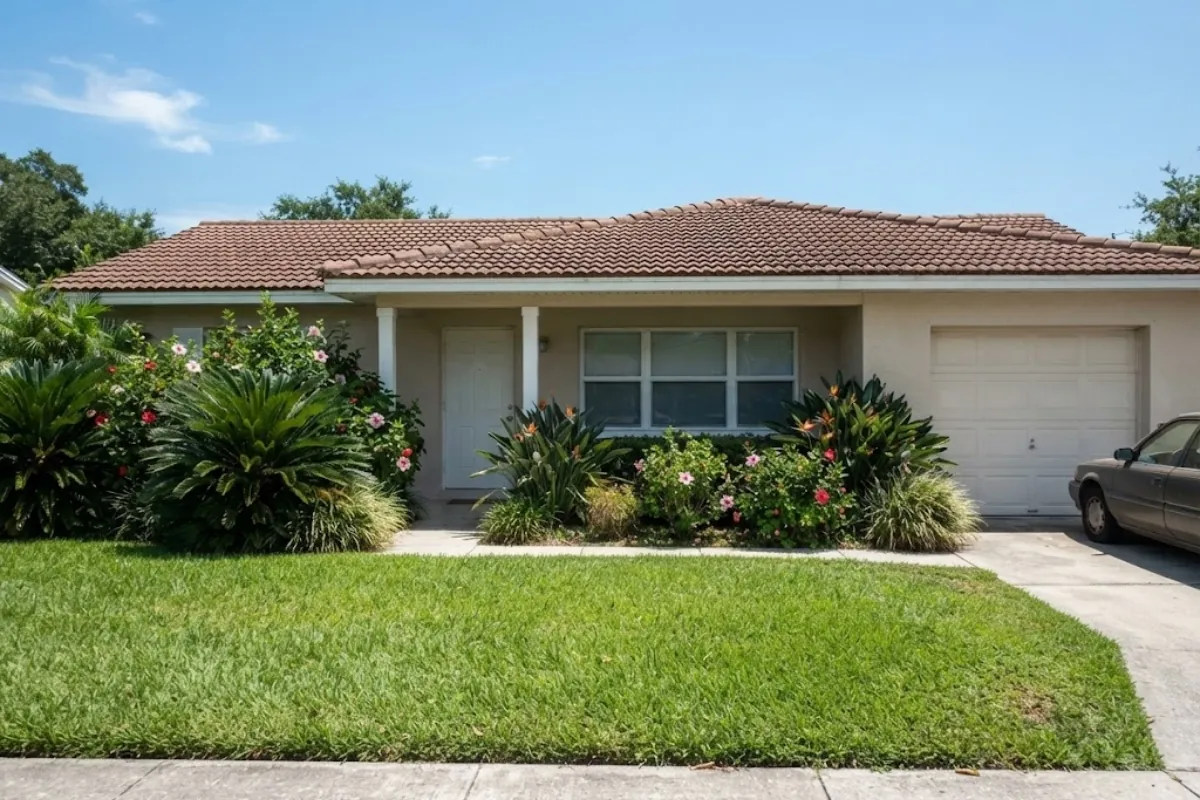
Hard water from the Floridan aquifer
GRU draws Gainesville's water from the Floridan aquifer and treats it at the Murphree Water Treatment Plant. The treatment includes lime softening, yet GRU still lists hardness at about 140 mg/L, or 8.2 grains per gallon. That is firmly in the hard range.
At that level, scale builds inside tank water heaters, tankless heat exchangers and faucet cartridges. A tank that hasn't been flushed in years loses capacity and starts to rumble. A water softener sized for 8 grains stops the white crust at the source, and tank water heater repair is where most scale damage ends up.
Historic districts and pre-1950 pipe
The Duckpond, officially the Northeast Gainesville Residential District, covers about 1,660 acres and 229 historic buildings. It joined the National Register in 1980. Pleasant Street, the Southeast district and both University Heights districts hold many homes from the same era.
Houses from that period were commonly plumbed with galvanized steel supply and cast iron or clay drains. Galvanized rusts from the inside, so pressure drops long before it leaks. Brown water after a few days away usually points to the pipe, not the utility, and whole-home repiping in these houses is planned around plaster walls and original trim.
Sources: GRU water quality FAQ (hardness and source), Northeast Gainesville Residential District (National Register listing).
Storm season and the occasional hard freeze
Flood risk in Gainesville centers on Hogtown Creek on the west side and Sweetwater Branch on the east. When Hurricane Irma came through in September 2017, one rental on NW 34th Street took nearly four feet of water inside.
Heavy rain can push water into cracked sewer laterals and overload the lines. It shows up as a gurgling toilet or a floor drain backing up. If a storm leaves sewage in a tub, our professional drain cleaning service clears the line before the house is used again, and underground sewer line repair handles the crack that let the water in. Soaked floors and walls go to our water damage restoration service, which runs on its own phone line.
Freezes are rare here, but they happen, sometimes as late as March. When the forecast drops into the 20s overnight, drip the faucets on outside walls, cover the hose bibs and disconnect garden hoses. A pipe that splits in an attic or garage wall needs burst pipe repair right away, before the thaw sends water through the ceiling.
How pricing works
We price by the job, not by a clock you can't see. These are the things that move the number most:
- Access. A leak behind tile or under a slab costs more to reach than one under a sink.
- Pipe material and age. Galvanized and cast iron often need more replaced than the one bad section.
- Time of day. If an after-hours rate applies, you hear it on the phone before anyone is sent.
- Permits. Water heater replacements, repipes and gas work often need a building permit, which adds a fee.
- Parts. Tank versus tankless, standard versus high-efficiency fixtures, repair kit versus replacement.
On insurance: most Florida homeowners policies cover sudden, accidental water damage, such as a burst pipe, but not the pipe itself or a slow leak that ran for weeks. Check your own policy before assuming either way.
All plumbing work in Gainesville is held to the Florida Building Code, Plumbing, the state's adaptation of the International Plumbing Code. Permitted jobs are inspected against it.
Non-emergency estimates are free. On emergency calls, you get a firm price before work begins. Want your real number? Call (954) 697-4920.
Gainesville plumbing questions, answered
Yes. The line is answered 24/7, holidays included. An emergency plumber can be sent at any hour for active leaks, sewage backups, a house with no water, or a gas smell after the gas is off.
Estimates for non-emergency work, like a water heater replacement or a repipe quote, are free. On an emergency call you get the diagnosis and a firm price before any work starts.
Often, yes. Turn off every fixture and watch the meter. If the flow indicator still moves, water is escaping somewhere between the meter and your fixtures.
That could be a running toilet, the buried service line or a pipe under the slab. Professional leak detection narrows it down without opening walls to guess.
Yes. We cover Alachua (32615), Newberry (32669), High Springs (32643), Archer (32618) and Hawthorne (32640), plus the unincorporated areas between them.
Yes. Many rural homes in western and northern Alachua County run on a private well and a septic tank. We repair well pumps and pressure tanks and take septic service calls.
Call your landlord or property manager first. Under Florida landlord-tenant law, keeping plumbing in working order is generally the landlord's job, though a lease can change the details.
Landlords and property managers can call us directly. We take the work order and bill the owner.
Sometimes an after-hours rate applies to nights, weekends and holidays. If it does, you hear it on the phone before anyone is dispatched, so you can decide whether the job needs to happen now or can wait.
Plumbing contractors in Florida are licensed by the state through the Department of Business and Professional Regulation. Ask any plumber for their license number before work starts and look it up on the DBPR's public license search. That applies to us and to anyone else you call.
Yes. Restaurants, offices and multi-unit buildings use the same 24/7 line. Business commercial plumbing work includes grease interceptors, backflow testing and after-hours repairs that keep a business open.
Emergency plumber service across Gainesville
We cover all of Gainesville, from the Duckpond and downtown to Haile Plantation, the Millhopper area, the neighborhoods around the University of Florida and east Gainesville along Hawthorne Road. That takes in ZIPs 32601, 32603, 32605, 32606, 32607, 32608, 32609, 32641 and 32653.
A slab leak in 32608, a backed-up main in a 32601 bungalow or a dead water heater in 32606 all get the same 24/7 response.
- Gainesville
- Alachua, 32615
- Newberry, 32669
- High Springs, 32643
- Archer, 32618
- Hawthorne, 32640
Plumbing problem right now?
The line is answered around the clock. You'll get an arrival window and a straight answer on price.