Well Pump Repair in Gainesville, FL and Rural Alachua County
Well pump repair gets water flowing again on homes that draw from a private well instead of GRU. The work covers the pump in the well, the pressure tank, the pressure switch and controls, and the piping between the well and the house.
A well that stops pumping leaves the house with no water at all. That's an emergency, and the line is answered 24/7 for homes across the rural parts of the county.
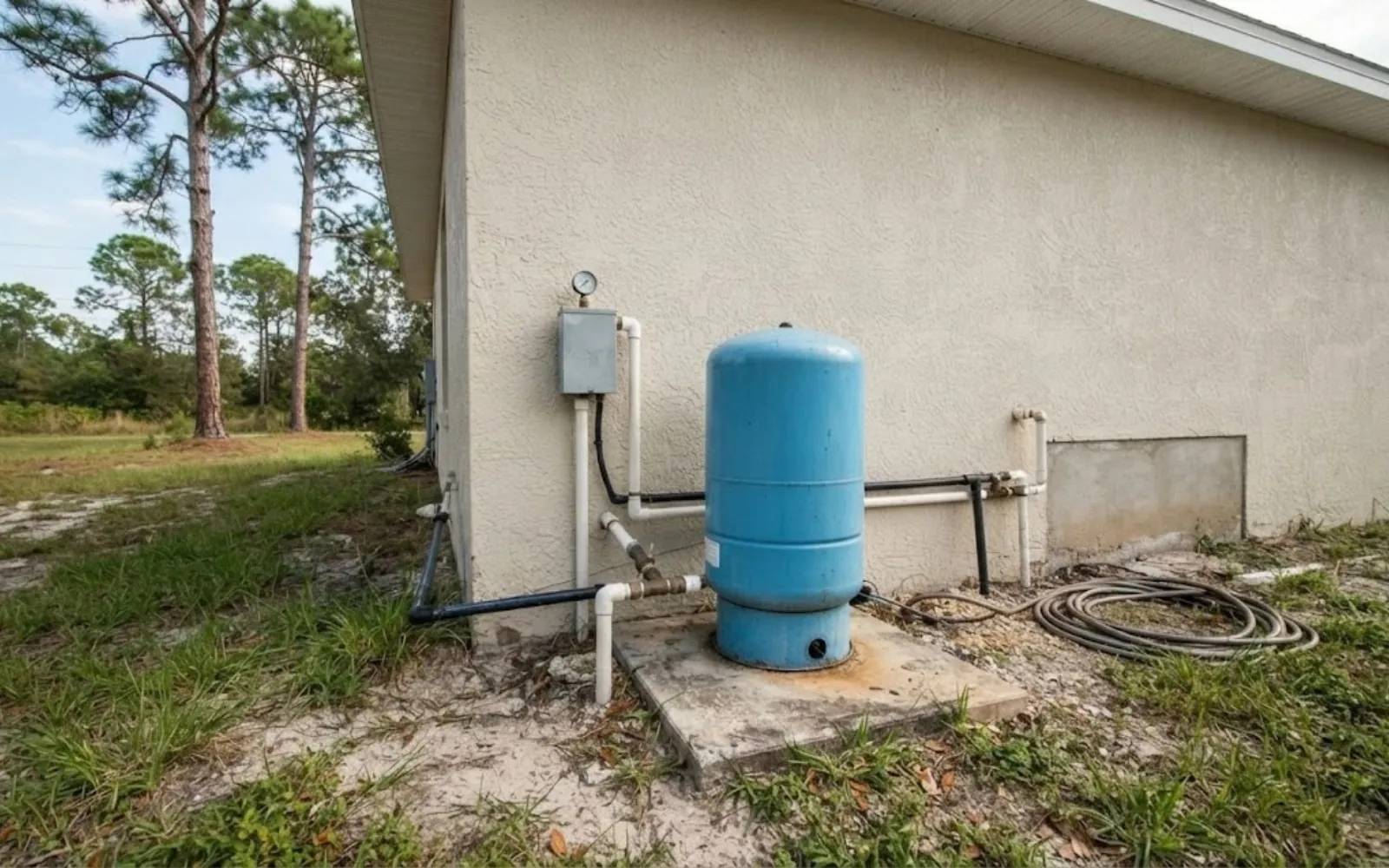
What your well system is telling you
| Symptom | Likely cause | Usual fix |
|---|---|---|
| No water at all. | Tripped breaker, failed pressure switch, dead pump or control box. | Test power and controls, then the pump. |
| Pump clicks on and off rapidly. | Waterlogged pressure tank or wrong air charge. | Recharge or replace the tank. |
| Pump runs and never shuts off. | Leak in the line, failing pump or low water level. | Find the leak, test pump output. |
| Low or surging pressure. | Pressure switch setting, clogged filter or worn pump. | Adjust or replace the switch, check the filter. |
| Sand or grit in the water. | Worn pump or damaged well screen. | Pump inspection, sediment filter. |
| Air sputtering from faucets. | Pump drawing air, low water level or a leak on the suction side. | Check water level and piping. |
Wells in rural Alachua County
Homes outside GRU's water service area, on larger lots west, north and east of Gainesville, usually draw water from a private well into the Floridan aquifer. The same limestone that supplies the city supplies these wells, just without a treatment plant in between.
Many homes use a submersible pump down in the well, feeding a pressure tank in a pump house or garage. The tank holds a cushion of air that keeps pressure steady and stops the pump from starting every time someone opens a tap. When that air cushion is lost, the pump short-cycles and burns itself out early.
Florida's summer storms are hard on wells too. Lightning strikes and power surges regularly take out pump controls and pressure switches, and sometimes the pump motor itself.
No water? Check these before you call
- Check the breaker. Well pumps have their own breaker, often a double-pole one. Reset it once. If it trips again, stop.
- Look at the pressure gauge. Near the tank. If it reads zero or near zero, the pump isn't building pressure.
- Listen at the tank. A clicking pressure switch with no pump running points to controls or the pump.
- Check any whole-house filter. A clogged sediment filter can choke flow even with a good pump.
If none of those restore water, call. Pumps and controls work on high voltage, and diagnosing them safely takes the right meters and experience.
Well permits and water testing
New wells and major well work in Florida are permitted through the water management districts. Alachua County sits across two of them, the Suwannee River and St. Johns River districts, depending on location. Pump and tank replacements on an existing well are usually plumbing-side work and don't need a new well permit.
Well owners are responsible for their own water quality. Testing for bacteria after flooding or any well repair is a good habit, and hardness, iron and sulfur are worth testing for before choosing treatment. Water filtration and a whole-house water softener handle what the test finds.
What affects the cost of well pump repair
- Which part failed. A pressure switch costs far less than a submersible pump.
- Well depth. Pulling a pump from a deeper well takes more time and equipment.
- Pump type and size. Horsepower and flow rate set the pump price.
- Tank replacement. A new pressure tank is often recommended when the pump is replaced.
- After-hours calls. Quoted on the phone before dispatch.
Want your real number? Call (954) 697-4920. Estimates for planned replacements are free.
Wells around the county
We work on wells across rural Alachua County, including homes around Archer, Hawthorne and High Springs. The buried line from the well to the house fails the same way a city service line does, and water service line repair covers it.
Well homes often pair with septic systems. If drains are backing up rather than water failing to arrive, the problem is on the other side, handled by septic service work.
Well construction permitting through the Suwannee River and St. Johns River water management districts. Pump and piping work under the Florida Building Code, Plumbing, based on the International Plumbing Code (IPC).
Well pump questions
Yes. A house with no water is an emergency, and the line is answered 24/7. Reset the pump breaker once first.
The pressure tank has likely lost its air charge or become waterlogged. Recharging or replacing the tank fixes it and saves the pump from burning out.
Often around 8 to 15 years, depending on use, water quality and how well the pressure tank protects it from short-cycling.
Yes. Surges from nearby strikes often damage pressure switches, control boxes and pump motors. A surge protector on the pump circuit helps.
Replacing a pump or tank on an existing well usually doesn't need a new well permit. Drilling a new well or major well construction does.
Yes, especially after flooding or any repair to the well. A bacteria test is the minimum, and a mineral test helps pick the right treatment.