Burst Pipe Repair in Gainesville, FL
Burst pipe repair stops the water and replaces the failed section with new pipe. Then it finds out why the pipe failed, so it doesn't happen again a few feet down the line. In Gainesville, the cause is usually one of three things: a rare hard freeze, pressure that is too high, or pipe that has simply aged out.
A burst pipe is a true emergency. The line is answered 24/7, and the first question we'll ask is whether you've been able to shut off the water.
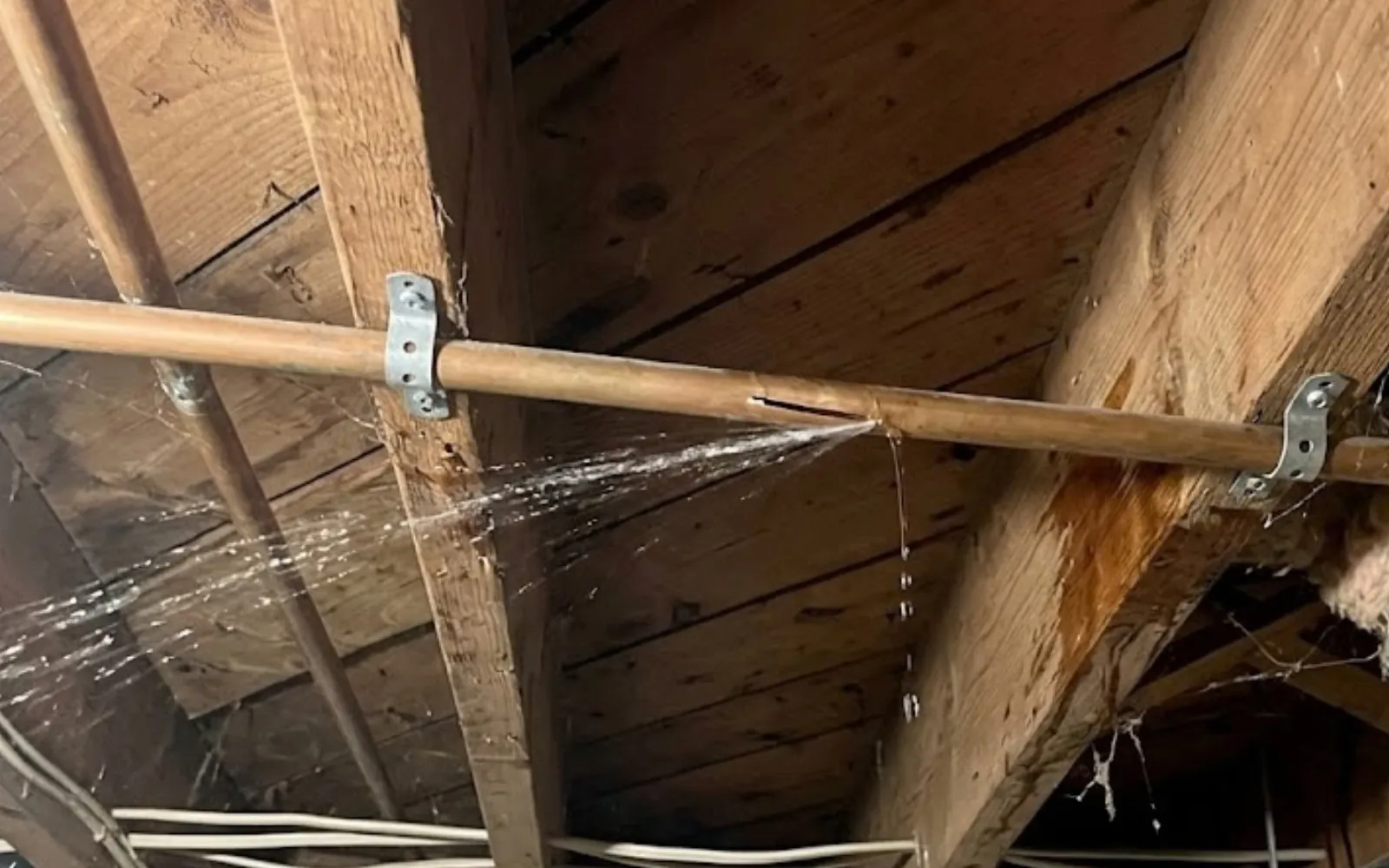
Water pouring out? Do these four things first
- Close the main shutoff. It's usually where the supply enters the house. If it won't turn, tell us on the phone and we'll help you find another way to stop the water.
- Open a faucet at the lowest point in the house. It drains the pressure out of the lines so the break slows to a drip.
- Turn off power to anything getting wet. If water is near outlets, a panel or appliances, switch off those breakers, but only if you can reach the panel from a dry spot.
- Photograph the damage before moving things. Your insurer will want to see what happened before cleanup started.
How pipes burst in a city that rarely freezes
Freezes are the obvious cause, and they do happen here. Some winters bring overnight lows below freezing, sometimes as late as March. Early 2026 brought record-breaking cold to much of Florida, and burst pipes followed across the state. Houses built for Florida weather often have supply lines in unheated attics, exterior walls and garages, which is exactly where they freeze.
Pressure is the quieter cause. When a home's pressure-reducing valve fails, pressure can climb well above what household fixtures and hoses were built for. Old or weak pipe gives way at the worst joint.
Age is the third. Polybutylene splits at its fittings, galvanized rusts through from the inside, and CPVC in a hot attic grows brittle over the years. None of them needs a freeze to fail.
Where pipes burst in Gainesville homes
| Location | Usual cause | What to check after the repair |
|---|---|---|
| Attic supply lines. | Freezing or CPVC gone brittle in attic heat. | Insulation on the rest of the run. |
| Exterior walls and hose bibs. | Freezing on the coldest nights. | Frost-proof hose bibs, disconnected hoses. |
| Garage lines. | Freezing, or impact damage. | Pipe insulation, protection from cars and storage. |
| Washing machine hoses. | Old rubber hoses under constant pressure. | Braided steel replacements. |
| Irrigation and yard lines. | Freezing above ground, or mower and root damage. | Backflow assembly and above-ground piping. |
Sprinkler systems deserve a special mention. The backflow assembly usually sits above ground and freezes before anything in the house. If yours cracked, backflow testing and repair gets it back in service.
Before the next cold night
When the forecast calls for temperatures in the 20s for several hours, these steps are worth ten minutes of your evening.
- Let indoor faucets on outside walls run a thin stream. Moving water resists freezing.
- Open cabinet doors under sinks on outside walls. Warm room air reaches the pipes.
- Disconnect garden hoses and cover the hose bibs. A hose holds water against the valve and freezes it.
- Wrap exposed pipes in the garage and at the well. Foam pipe sleeves are cheap. Towels work in a pinch.
- Know where your main shutoff is. Finding it at 3 a.m. with water running is much harder.
Insurance and the water left behind
Most Florida homeowners policies cover sudden, accidental water damage from a burst pipe. They usually don't cover the pipe itself, and they may deny slow leaks that went on for weeks. The distinction is timing, so document the date and time you found it.
We fix the pipe. Drying out soaked drywall, insulation and flooring is a separate job, handled through our structural water damage restoration service, which runs on its own phone line. Starting the drying quickly limits mold in Gainesville's humidity.
What a burst pipe repair costs depends on
- Access. An exposed garage line is quick. A break inside a finished wall or ceiling needs an opening.
- Pipe material. Matching old galvanized or polybutylene can mean replacing more than the broken piece.
- How many breaks. A freeze often splits more than one spot.
- Root cause fixes. A new pressure-reducing valve, if high pressure caused the break.
- Time of day. After-hours rates, if any, are quoted before dispatch.
Want your real number? Call (954) 697-4920. We'll give you the price before work starts.
When one burst means more to come
A single break from a hard freeze is bad luck. A second break in polybutylene or galvanized pipe within a year is a pattern. At that point, repiping the supply lines usually costs less than the next few emergencies.
Homes on private wells outside the city, around Hawthorne and other rural parts of the county, have pump and pressure-tank piping that sits exposed and freezes first. Insulating it is the cheapest fix there is. If water is missing after a repair, acoustic leak detection checks for a second break you can't see.
Florida cold weather impacts per AccuWeather's early 2026 reporting. Pressure and freeze protection follow the Florida Building Code, Plumbing, based on the International Plumbing Code (IPC).
Burst pipe questions
Yes. Burst pipes are exactly why the line runs 24/7. Shut the main valve first, then call, and we'll give you an arrival window.
Check where the supply line enters the house, often near the garage or a front hose bib. If you still can't find it, tell us on the phone and we'll walk you through the other options.
Gentle heat from a hair dryer or space heater is fine. Never use an open flame. Open the faucet first so melting ice has somewhere to go, and watch for a split once water starts moving.
Often, but not always. Freezing can crack a fitting that holds until the pressure comes back. Watch for drips for a day or two after a thaw.
Usually for the sudden water damage, not the pipe itself. Photograph everything, note the time, and call your carrier before throwing damaged items away.
A reachable break is often fixed within an hour or two of arrival. Breaks inside walls or ceilings, or several breaks after a freeze, take longer.
The tenant should shut off the water and call the landlord's emergency contact. Property managers can call us directly, and we'll stop the water, repair the pipe and send the owner the findings and photos for the insurance claim.