Water Softener Installation and Repair in Gainesville, FL
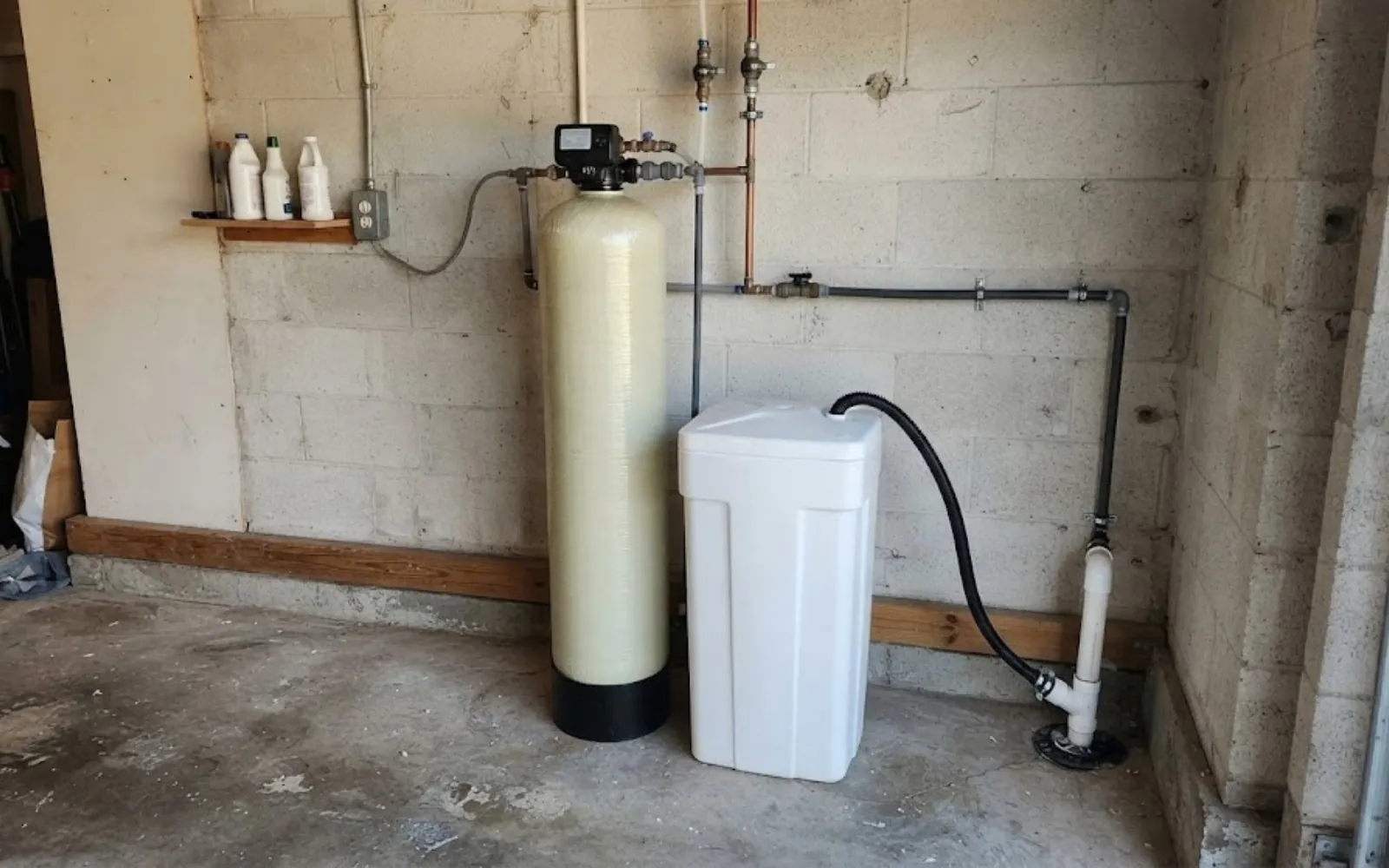
A water softener removes the calcium and magnesium that make water hard, using resin beads that swap those minerals for sodium or potassium. We install new softeners, repair ones that have stopped softening, and replace control valves and resin in older units.
Softener work is planned, not urgent. A softener leaking across the garage floor is the exception, and the line is answered 24/7.
How hard is Gainesville water, really?
GRU lists its water at about 140 mg/L as calcium carbonate, or 8.2 grains per gallon. That's in the hard range, and it's after treatment. The Murphree Water Treatment Plant already lime-softens the water it pumps from the Floridan aquifer, which takes out some hardness but leaves plenty behind.
You see it as white crust on showerheads and faucets, spots on dishes and glass shower doors, and soap that doesn't lather well. What you don't see is the scale building up inside the water heater, the tankless heat exchanger and every valve in the house.
Private wells in rural Alachua County draw from the same limestone aquifer without any plant treatment, so well water is often harder still. A water test is the first step on any well system.
Is your softener working?
Softeners fail quietly. The water just slowly goes back to hard. These are the signs.
- White spots and crust are back. The resin isn't regenerating or has worn out.
- Salt level never goes down. The unit isn't drawing brine, often a clogged injector or a salt bridge.
- Water in the brine tank is always high. The drain line or float valve has a problem.
- The unit runs a cycle at odd times or not at all. The control valve's timer or settings are off, often after a power outage.
- Salty-tasting water. The unit is set wrong or not rinsing fully.
A salt bridge, a hard crust across the salt in the tank, is a common and easy fix. Break it up with a broom handle and let the unit regenerate.
Softener, filter or both?
| System | What it fixes | What it doesn't |
|---|---|---|
| Water softener. | Hardness: scale, spots, poor lather. | Chlorine taste, sediment, most contaminants. |
| Whole-house carbon filter. | Chlorine taste and odor. | Hardness. |
| Reverse osmosis at the sink. | Drinking water taste and many dissolved solids. | Anything outside the kitchen tap. |
| Salt-free conditioner. | Reduces how scale sticks in some systems. | Doesn't remove hardness minerals. |
Many Gainesville homes pair a softener with a whole-house or drinking-water filter. Our water filtration installation page covers that side.
What installation includes
- Test and size. We measure hardness and ask how the house uses water, then size the unit.
- Pick the spot. Usually the garage, near where the main line enters, with room for the brine tank.
- Plumb it with a bypass. A bypass valve lets you switch the softener out of the system for service.
- Drain connection. The regeneration discharge goes to an approved drain with a proper air gap.
- Program and start up. Hardness, household size and regeneration time are set, and the first cycle is run.
What softening does for water heaters and fixtures
Scale is the main reason water heaters and tankless units in Gainesville need so much attention. A softener stops that at the source. Tank heaters collect far less sediment, and tankless units can go much longer between descaling. It stretches the life of water heater repairs and the heater itself.
Faucet cartridges, toilet fill valves and the valves behind a new shower or tub last longer too. If a home keeps needing faucet and sink repair for stiff handles and weak flow, hard water is often why.
What affects softener pricing
- Capacity. Larger households and harder well water need a bigger unit.
- Valve type. Metered, on-demand valves cost more up front and use less salt and water.
- Installation location. A garage near the main line is simplest. Rerouting the line costs more.
- Repair or replace. A new control valve or resin bed can extend an older tank's life.
Want your real number? Call (954) 697-4920. Installation estimates are free.
Softeners on well water
Homes on private wells, like many outside the city around Archer, often have iron along with hardness. A softener can handle small amounts of iron, but heavier iron or a sulfur smell needs a filter ahead of it. The well system itself is covered by well pump repair.
Hardness and treatment process per the GRU water quality FAQ and annual water quality reports. Drain air gap requirements from the Florida Building Code, Plumbing, based on the International Plumbing Code (IPC).
Water softener questions
GRU's plant removes some hardness, but its own data puts tap water at about 8.2 grains per gallon, which is still hard. A home softener takes it down close to zero.
Put the softener in bypass to stop the leak, then call. The line is answered 24/7. If you can't find the bypass, shut the main.
It depends on the unit and household size. Many homes add a bag or two a month. Keep the tank at least a third full.
At Gainesville's hardness level, the added sodium is small and most people don't taste it. Potassium chloride can be used instead of salt, and a drinking-water filter removes it at the kitchen tap.
The tank and resin often last many years. Control valves can wear out sooner and can usually be replaced without replacing the whole unit.
No. Salt-free conditioners change how minerals behave but leave them in the water. They don't soften it.