Water Line Repair and Replacement in Gainesville, FL
Water line repair fixes the buried service line that carries water from the meter to your house. It is a different job from repiping, which replaces the pipe inside the walls. When this one leaks, the house can look perfectly dry while the meter keeps turning and a patch of lawn stays soggy.
A broken service line can leave you with no water at all. If that's where you are, the line is answered 24/7.
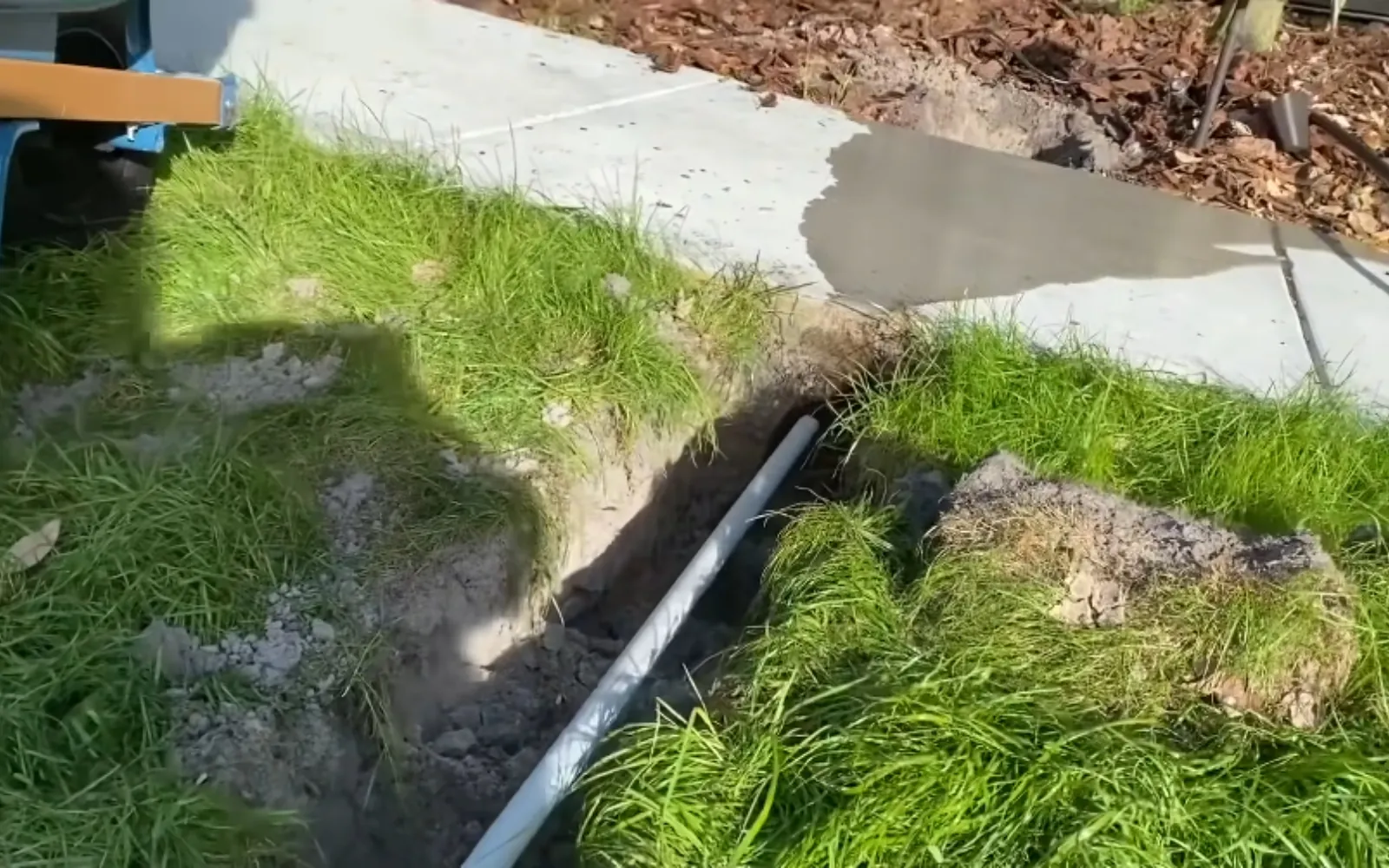
Meter to house: whose pipe is it?
GRU owns and maintains the water main and the meter. The pipe on your side of the meter, the one running under the yard to the house, belongs to the property owner. So does the job of finding and fixing a leak in it.
That split matters when you call. If the leak is on the street side of the meter or at the meter itself, call GRU. If the meter's low-flow indicator spins with the house shutoff closed, the leak is almost always on your side, somewhere in this buried line.
If the leak turns out to be inside the house after all, the job moves to leak detection or, for a line under the foundation, professional slab leak repair.
Signs the service line is failing
- A soggy strip of lawn that doesn't dry out. Especially in a straight line between the meter and the house.
- The meter dial moves with the house valve shut. The water is leaving between the two.
- Low pressure at every fixture at once. A line that is leaking or narrowed feeds the whole house poorly.
- A dip or small sinkhole over the line's path. Escaping water carries sand away underground, and it matters more on Gainesville's limestone.
- Brown water throughout the house after work in the street. Old galvanized service lines shed rust when pressure changes.
Service line materials and how they fail
The age of the house usually tells us what's in the ground before we dig.
| Material | Common in | How it usually fails |
|---|---|---|
| Galvanized steel. | Pre-1960 homes, including the historic districts. | Rusts through and closes up inside. |
| Polybutylene. | Homes built from the late 1970s to the mid-1990s. | Splits at fittings and connections. |
| Copper. | Many homes from the 1960s onward. | Pinholes, or damage from shifting soil. |
| PVC or polyethylene. | Newer homes and past replacements. | Cracks from roots, digging or settling. |
Digging in Gainesville ground
On the west side of the city, limestone can sit just a few feet under the sand. Trenching through it is slower than digging in sand alone, and it's one reason we look at trenchless options early on those properties.
Big oaks are the other obstacle. A line that runs under a mature tree's root zone is hard to reach, and cutting major roots can harm the tree. A new line bored along a different route often makes more sense than following the old one.
Florida law requires a locate request through Sunshine 811 before any digging, so gas, electric and communication lines are marked first. We place that request as part of the job.
Repair options, from smallest to largest
- Spot repair. One leak in otherwise good pipe gets dug out and fixed at that point.
- Full replacement by trench. A new line runs from the meter to the house along an open trench, and the old line is abandoned.
- Trenchless replacement. A new line is pulled or bored underground between two small pits, useful under driveways, walks, landscaping and trees.
A single leak in a copper or plastic line is usually a spot repair. Galvanized or polybutylene lines are usually worth replacing outright, since the next leak is already on its way. If the pipes inside the house are the same age, pair this with repiping work.
What changes the price of water line work
- Length of the run. Larger lots mean longer lines.
- What's on top. Lawn is cheap to open. Driveways, pavers and mature landscaping are not.
- Method. Trenchless costs more in equipment but less in restoring the yard.
- Ground conditions. Shallow limestone slows trenching.
- Permit and inspection. Required for a full replacement.
Want your real number? Call (954) 697-4920. Replacement estimates are free.
Service lines outside the city
On larger lots in Newberry and other outlying towns, service lines can run a long way from the road, and the meter may sit well out of sight of the house. A long line leaking slowly can go unnoticed for months. Buried pool lines fail the same way, and professional pool leak detection tests them.
Homes on private wells don't have a utility service line at all. Their buried line runs from the well and pressure tank to the house, and private well pump repair covers that system.
Dig-safe locate requirements under Florida's Underground Facility Damage Prevention and Safety Act (Sunshine 811). Pipe work follows the Florida Building Code, Plumbing, based on the International Plumbing Code (IPC).
Water line repair questions
No. GRU is responsible up to and including the meter. The line from the meter to your house is the property owner's to maintain and repair.
Yes. The line is answered 24/7. Check with a neighbor first. If they have water and you don't, the problem is likely your service line or shutoff.
With the house isolated, we listen along the line's path with ground microphones and pinpoint where the sound is strongest. It keeps digging to one small hole instead of a trench.
Not always. Trenchless methods can pull a new line under a driveway or walkway between two small pits.
Most residential replacements take one day, sometimes two if the run is long or the ground is rocky. Water is usually back on the same evening.
It can wash sand into voids and cause a small depression over the line. That is usually a local washout, not a geological sinkhole, but it's a good reason not to leave a yard leak running.
The landlord's. The buried line from the meter to the house is part of the property. A tenant who notices a soggy strip of yard or a high bill should report it in writing.