Sewer Line Repair in Gainesville, FL
Sewer line repair fixes a damaged section of the pipe that carries wastewater from your house to the public sewer or septic tank. It targets one problem spot: a crack, a root entry, an offset joint or a sagging section. The rest of the line stays in place.
Most sewer repairs are scheduled. A line that has failed and is backing sewage into the house is not, and the phone is answered 24/7 for that.
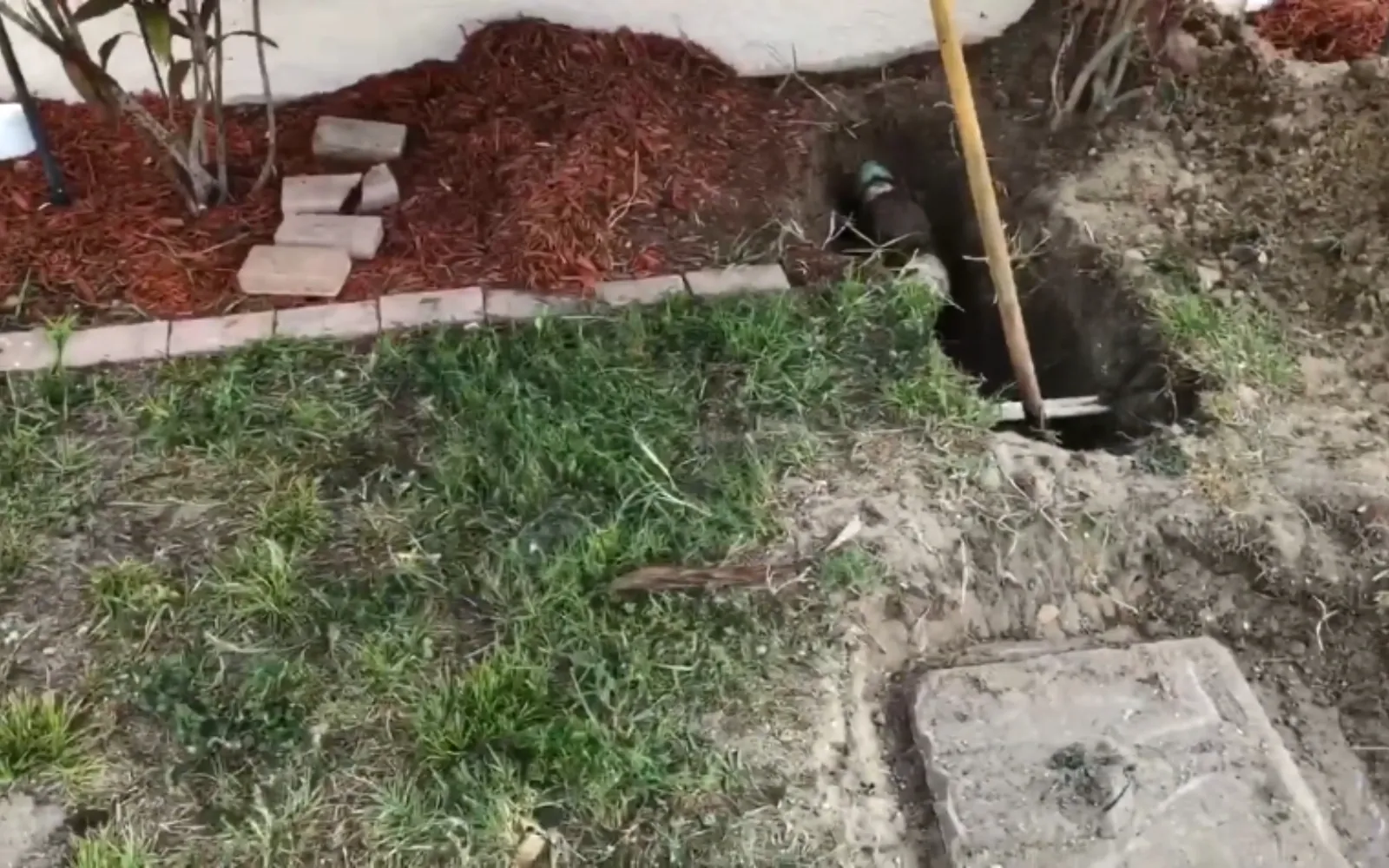
Signs of a damaged sewer line
- Clogs that return no matter how often the line is cleared. Something in the pipe keeps catching waste.
- A sewage smell in the yard. Wastewater is escaping through a crack or open joint.
- One patch of lawn greener than the rest. Sewage leaking underground feeds the grass above it.
- Gurgling toilets and slow drains all over the house. Flow is restricted somewhere past where the branch lines join.
- A soft spot or small dip over the line's path. Leaking water can carry sand into gaps, especially on limestone ground.
What the camera finds, and how each gets fixed
Every repair starts with a full sewer camera inspection. The camera shows what failed and exactly where, measured from the cleanout.
| Camera finding | What it means | Usual repair |
|---|---|---|
| Roots at a joint. | Roots entered through a gap between pipe sections. | Cut roots, then line or replace that joint. |
| Offset joint. | Two sections have shifted out of line. | Excavate and replace the joint. |
| Belly or sag. | A low section holds standing water and waste. | Dig and re-grade the section. |
| Crack or hole. | The pipe wall has broken. | Spot repair or a lining sleeve. |
| Scaling and thinning cast iron. | The pipe is corroding from the inside. | Line it, or replace if the damage is widespread. |
Why Gainesville laterals fail
The oldest laterals in the city, in and around the historic districts, are often clay tile. Clay itself lasts, but the joints between sections were never watertight, and oak roots find them. Once inside, roots grow into a mat that catches everything flushed past it.
Mid-century homes are more likely to have cast iron. In Florida's warm, damp ground and with decades of wastewater gases inside the pipe, cast iron corrodes from within. The bottom of the pipe wears through first, often where you can't see it.
Ground movement adds to both. Settling sand over limestone and shrinking clay after a dry spell can pull joints apart or create a sag that never drains fully.
How a spot repair works
- Locate from the surface. A transmitter on the camera head shows the damaged spot's position and depth from above ground.
- Call in utility locates. Buried gas, power and cable lines are marked through Sunshine 811 before any digging.
- Open only what's needed. A pit over the damaged section, not a trench across the yard.
- Replace the section. New PVC is joined to the existing pipe with approved couplings.
- Camera and backfill. A final camera run confirms the repair before the hole is filled and compacted.
When digging would mean breaking a driveway or damaging a tree, a lining sleeve can often seal the same spot from inside the pipe.
Repair or replace the whole line?
One or two defects in an otherwise sound line should be repaired. A camera run that shows damage every few feet, or a lateral made of fiber pipe that is deforming, is different. At that point spot repairs cost nearly as much as a new line and leave the rest waiting to fail.
That's when trenchless sewer line replacement makes more sense. We show you the video either way, so the decision is based on what's actually in the ground.
What changes the cost of a sewer repair
- Depth. A shallow lateral is quicker to reach than one several feet down.
- What's on top. Lawn is simple. Driveways, patios and tree roots add work.
- Method. Excavated spot repair versus a lining sleeve.
- Number of defects. Each separate problem spot is its own repair.
- Permit and inspection. Required for sewer work in most jurisdictions.
Want your real number? Call (954) 697-4920. Repair estimates come with the camera findings and are free for non-emergency work.
Keeping the line clear afterward
A repaired section doesn't fix the rest of the pipe. If roots were the cause, other joints may need attention in a few years. Periodic full-bore hydro jetting keeps root growth and grease from building up again, and it's gentle enough on sound pipe.
Homes on septic tanks, common on rural lots around Newberry, have the same pipe between the house and the tank. The same camera and repair methods apply, and a fix there often clears up what looked like a septic problem. For a single fresh clog, standard professional drain cleaning comes first.
Dig-safe locates under Florida's Underground Facility Damage Prevention and Safety Act (Sunshine 811). Repairs follow the Florida Building Code, Plumbing, based on the International Plumbing Code (IPC).
Sewer line repair questions
We can clear the line and stop the backup any hour, since the line is answered 24/7. An excavated repair usually follows in daylight, once utilities are located.
Generally, the property owner is responsible for the lateral from the house to the utility's connection. If neighbors are backing up too, call GRU first, since the public main may be the problem.
Usually only a small pit over the damaged spot. Lining can avoid digging entirely when the pipe is sound enough to hold a sleeve.
Most take a day, including locates, digging, repair and backfill. Inspection timing can add to that.
Many standard Florida policies exclude wear and tear on underground pipe. Some carriers offer a service line endorsement. Check your policy for one before you assume either way.
Roots usually enter through joints that were already slightly open, then widen them as they grow. The pipe is rarely crushed outright, but the joint fails.
The property owner, in almost every case. The lateral is part of the property's plumbing. We give the owner or manager the camera video and repair options before any digging.