Toilet Repair and Installation in Gainesville, FL
Toilet repair covers the handful of parts that fail in every toilet eventually: the flapper, the fill valve, the wax ring under the bowl and the supply line behind it. Installation is the full swap, old toilet out and new one set, sealed and tested.
Most toilet problems are not emergencies. An overflowing bowl or water seeping across the floor is, and our line is answered 24/7 for exactly that.
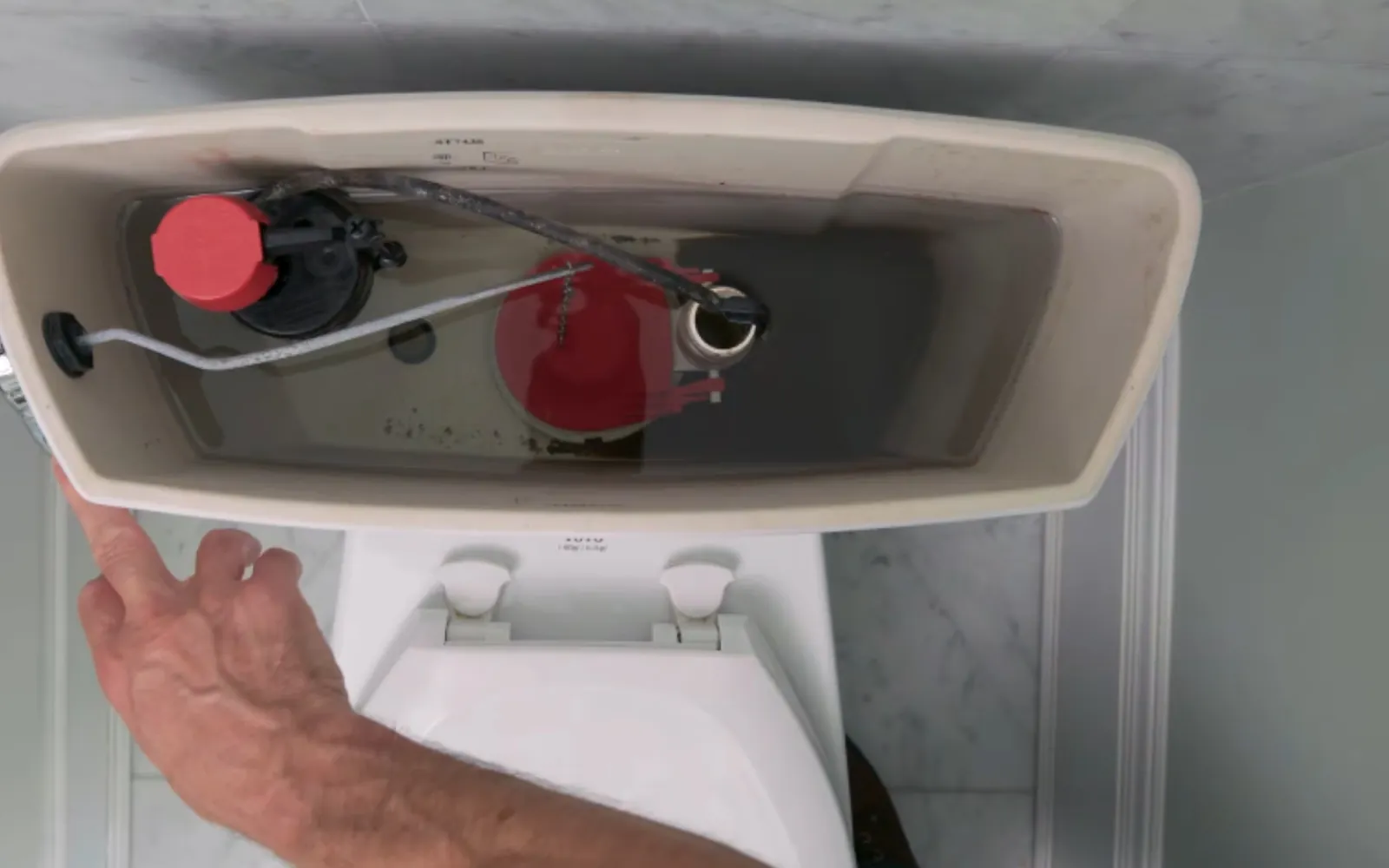
What your toilet is telling you
Match the symptom to the likely cause. Several of these are cheap parts, and knowing which one you have makes the phone call shorter.
| Symptom | Likely cause | Usual fix |
|---|---|---|
| Runs or hisses between flushes. | Worn flapper or a fill valve that won't shut off. | Replace the flapper or fill valve. |
| Refills on its own every so often. | Flapper leaking slowly into the bowl. | New flapper, sometimes a new flush valve seat. |
| Water on the floor around the base. | Failed wax ring, loose closet bolts or a cracked flange. | Pull the toilet, reset it on a new wax ring and bolts. |
| Bowl rocks when you sit. | Loose bolts or an uneven floor, often the start of a wax ring leak. | Shim, reset and reseal. |
| Weak flush that leaves waste behind. | Mineral buildup in the rim jets or a partial clog. | Clean the jets, clear the trap, or replace an old low-performing model. |
| Drip from the tank bottom. | Worn tank-to-bowl gasket or bolts. | Replace the gasket kit. |
| Clogs over and over. | Something lodged in the trap, or a problem in the drain line beyond the toilet. | Auger the trap, then check the line if it returns. |
A running toilet costs more in Gainesville than you would think
A toilet that runs all day can send hundreds of gallons down the drain without anyone noticing. GRU bills wastewater based on the water that passes through your meter, so every gallon a running toilet wastes gets charged again on the sewer side.
That is why a hissing tank is worth fixing this week rather than someday. A flapper or fill valve is a small part. A few months of doubled charges is not.
If the toilet is quiet but the bill is still high, the leak is somewhere else. Our leak detection service can check the rest of the system.
Hard water and toilet parts
Gainesville's water runs about 8.2 grains per gallon hard. Over a few years that mineral content stiffens rubber flappers, crusts the fill valve and narrows the small rim holes that rinse the bowl. The result is a toilet that runs, refills slowly or flushes weakly, even though nothing is broken.
When we replace parts, we use fill valves and flappers that tolerate mineral buildup well, and we clear the rim jets while the tank is open. It adds a few minutes and usually restores the flush.
Repair or replace: how we decide with you
Most toilets are worth repairing. The china bowl lasts decades, and the parts that wear out are inexpensive and standard.
Replacement makes sense in a few specific cases. A cracked tank or bowl cannot be repaired safely. A toilet made before 1994 may use 3.5 gallons or more per flush, compared with 1.28 gallons for a WaterSense-labeled model today. In a GRU home, where water and wastewater are both billed on usage, that difference adds up month after month.
Other reasons people replace: a taller bowl that is easier to use, a toilet that has clogged every month for years, or a bathroom remodel. We will tell you if a repair will do the job.
Before you call about a toilet
- Close the supply valve behind the toilet. Turn it clockwise. If it will not budge or it drips, tell us, because that valve may need replacing too.
- Do not keep flushing a clogged toilet. One more flush is how bathrooms flood.
- Check other drains. If the tub or shower also gurgles or backs up, the clog is probably in the main line, not the toilet.
- Note the toilet's age. A date is often stamped inside the tank lid. It helps us decide between repair and replacement.
When more than one fixture backs up at once, the toilet is just where the water shows up. That is a job for main drain cleaning on the main line.
What a new toilet installation includes
- Remove the old toilet. Drain it, disconnect it and lift it clear of the flange.
- Inspect the flange. A cracked or rusted flange is repaired before anything new goes down, since it is the most common cause of future base leaks.
- Set on a new seal. New wax ring or wax-free seal, new closet bolts and a new supply line.
- Level, secure and caulk. No rocking, no gaps.
- Test. Several flushes, a check for leaks at the base and the tank, and an adjusted fill level.
Toilets in older Gainesville houses
Homes in the Duckpond and other pre-war neighborhoods often sit on raised foundations, with cast iron drain pipe under the floor. The flange that holds the toilet down in these houses is often cast iron too, and after decades it can rust thin or crack when the bolts are tightened.
Older bathrooms also sometimes have a rough-in, the distance from the wall to the drain, that is not the modern 12-inch standard. We measure before you buy a new toilet, so it actually fits the drain where it sits. If the floor under the old toilet has gone soft from a slow leak, that gets addressed before a new one goes down.
What affects the price of toilet work
- Repair or replacement. A flapper or fill valve costs far less than a new toilet and install.
- Flange condition. A broken flange adds a repair before the toilet can be reset.
- Shutoff valve. Old multi-turn valves that leak or seize are often replaced in the same visit.
- The toilet itself. Standard, comfort-height, one-piece or dual-flush models vary widely in cost.
- Timing. Overflows at night may carry an after-hours rate, quoted before dispatch.
Want your real number? Call (954) 697-4920. Estimates for replacements are free.
Toilets on septic, city sewer and in rentals
Most Gainesville homes are on GRU sewer. Farther out, in places like Archer, many homes run on septic tanks, where a constantly running toilet can flood the drain field. On septic, a running toilet is worth fixing the same day.
Landlords and property managers with units near the University of Florida can book toilet repairs directly, and a leaking wax ring in an upstairs unit is one of the calls worth making before the ceiling below shows a stain. If the same bathroom also has a dripping faucet, faucet and sink repair can happen on the same visit while the water is off.
Sources: EPA WaterSense (1.28 gallons per flush labeling threshold), GRU customer service (wastewater billed on metered water use), GRU water quality FAQ (hardness).
Toilet repair and installation questions
If the water will not stop after you close the valve behind the toilet, or it is coming up from the floor, yes. The line is answered 24/7. If the valve stops it, the repair can usually wait until morning.
That is called phantom flushing. The flapper is letting water leak slowly into the bowl, and the tank refills to make up for it. A new flapper usually fixes it.
About one to two hours for a standard swap. Add time if the flange or shutoff valve needs repair.
No. Caulk hides the leak and traps water under the toilet, which rots the subfloor. A base leak means the wax ring or bolts have failed, and the toilet needs to be pulled and reset.
Yes. We can install a toilet you purchased. We will check it for shipping cracks before setting it.
It can be, especially in a busy household on GRU water, since the light flush saves water on every use. The trade-off is a slightly different flush mechanism to maintain.
Yes. Add us as the plumbing contact, and tenants can call the 24/7 line. We confirm the repair and price with you before work starts, and note whether the cause looked like wear or misuse, which helps with any chargeback question.