Septic Service in Gainesville, FL and Alachua County
Septic service covers the tank, the drain field and the pipe connecting them to the house. That means pumping the tank on schedule, clearing backups, repairing baffles and lines, and finding out why a system that used to work is struggling.
Most septic work is routine. Sewage coming up in a tub or floor drain isn't, and the line is answered 24/7.
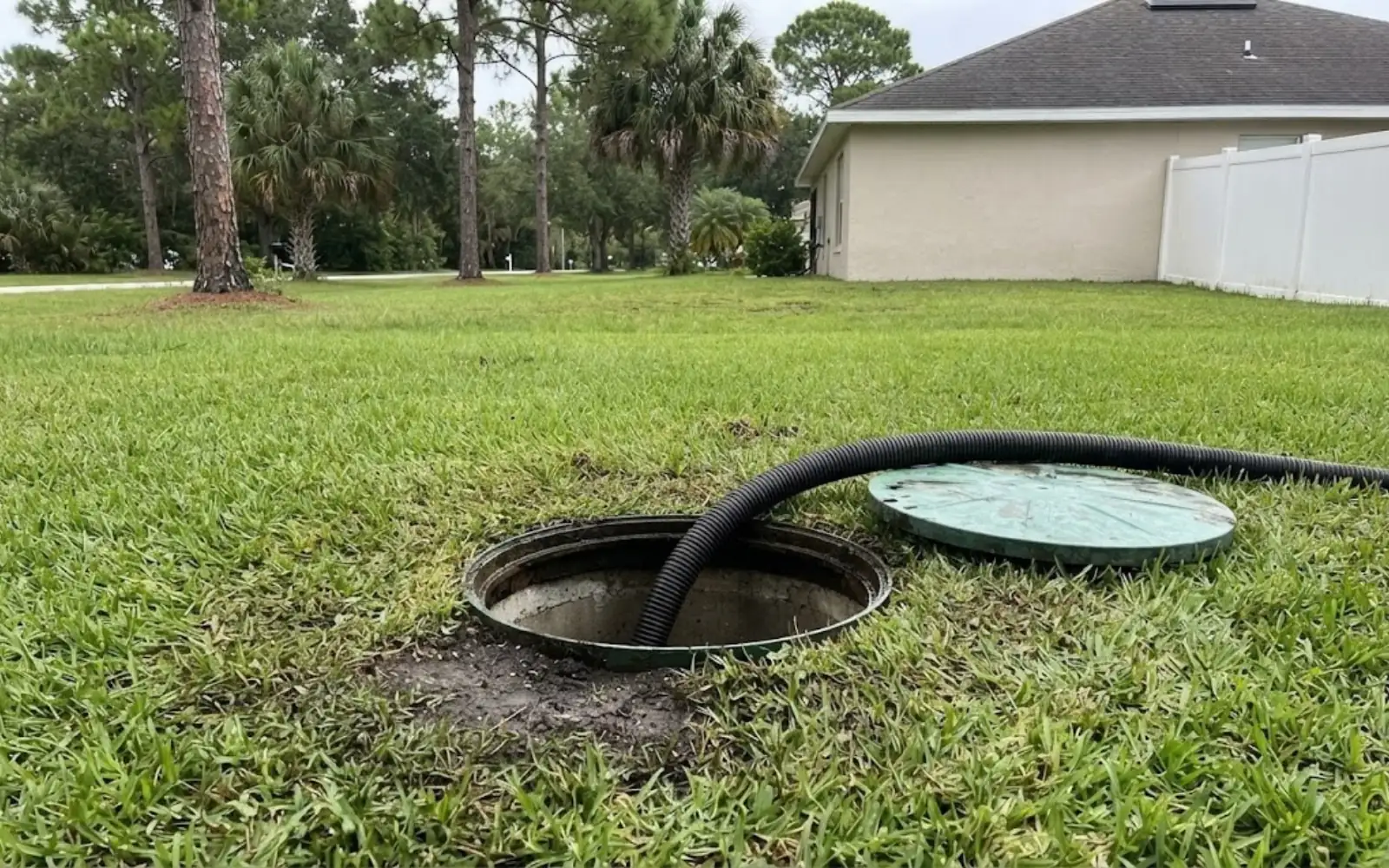
Signs your septic system needs attention
- Every drain in the house is slow. The tank may be full or the outlet blocked.
- Gurgling from drains or toilets. Air is being pushed back through the plumbing by a restriction.
- Sewage smell in the yard. Near the tank or over the drain field.
- Soggy ground or bright green grass over the drain field. Effluent is surfacing instead of soaking in.
- Sewage coming up in a tub or floor drain. The line or tank is full. Stop using water.
How a septic system works
Wastewater leaves the house through a buried line into the septic tank. Solids settle to the bottom as sludge, grease floats to the top as scum, and the liquid in the middle flows out to the drain field, where it soaks into the soil.
The tank only works if it's pumped before the sludge and scum layers get too thick. Once they do, solids wash out into the drain field and clog it. A clogged drain field is the expensive failure. A pumped tank is the cheap prevention.
The EPA's general guidance is to have a household septic tank inspected every few years and pumped typically every three to five years. The right interval depends on tank size, household size and habits like using a garbage disposal, which adds solids.
Backup? Here's how we figure out where
| Where the problem is | What points to it | Usual fix |
|---|---|---|
| Line from house to tank. | Backup in the house, tank level normal. | Clear the line, camera it, repair any break. |
| Tank inlet or outlet baffle. | Solids blocking the inlet or pushing out the outlet. | Pump, then repair or replace the baffle. |
| Full tank. | High sludge level at pumping. | Pump the tank. |
| Drain field. | Tank refills quickly after pumping, soggy ground. | Field evaluation, and repair or replacement. |
The line between the house and tank is plumbing, and it's often the simplest fix. A camera inspection shows whether it's cracked, root-filled or sagging, and underground sewer line repair handles the damage.
Septic systems near the springs
Alachua County has some of Florida's best-known springs along the Santa Fe River, near High Springs. Septic systems add nitrogen to groundwater, and in parts of the springs region, state springs-protection plans can require nitrogen-reducing systems when a septic system is new or replaced.
Septic permits in Florida are overseen by the Department of Environmental Protection. If your system needs more than a repair, check what applies to your specific property before choosing a replacement. Homes near the Santa Fe River, around High Springs, are worth checking first.
Keeping a septic system healthy
- Pump on schedule. Keep a record of the date and the sludge level at each pumping.
- Keep grease and wipes out. Even wipes labeled flushable don't break down in a tank.
- Fix running toilets fast. A running toilet can send hundreds of gallons a day into the drain field.
- Keep traffic off the drain field. No cars, sheds or pools over it.
- Spread out laundry. Several loads in a row can overload the field.
What affects septic service pricing
- Tank size. Larger tanks take longer to pump.
- Access. Buried lids need to be dug out, and adding a riser saves that cost next time.
- Line work. Clearing or repairing the house-to-tank line is separate from pumping.
- Drain field condition. Field repairs or replacement are much larger projects.
- After-hours backups. Quoted before dispatch.
Want your real number? Call (954) 697-4920. Routine service estimates are free.
Septic homes across the county
We handle septic calls in unsewered parts of Gainesville and across rural Alachua County, including Archer, Hawthorne and High Springs. Many of these homes are also on wells, and professional well pump repair covers the supply side. For a simple clog inside the house, standard professional drain cleaning comes first.
EPA septic system maintenance guidance (inspection and pumping intervals). Florida DEP oversight of onsite sewage treatment systems. Line work under the Florida Building Code, Plumbing, based on the International Plumbing Code (IPC).
Septic service questions
Stop using all water, including toilets and laundry, and call. The line is answered 24/7.
Typically every three to five years for a household, according to EPA guidance. Larger households, smaller tanks or a garbage disposal mean more often.
They aren't a substitute for pumping. A healthy tank already has the bacteria it needs.
Grass is fine. Trees and large shrubs aren't, since their roots can clog the field lines.
Usually the drain field isn't accepting water, or a running toilet or leak is sending extra water into the tank.
Yes. Septic installation and replacement are permitted in Florida, and some areas near the springs have additional requirements.