Water Filtration Installation in Gainesville, FL
Water filtration installation puts a filter system on your home's water, either at the main line for the whole house or at the kitchen tap for drinking water. The right system depends on what's actually in your water, which is different for GRU customers than for homes on private wells.
Filtration is planned work. If a filter housing cracks and floods the garage, the line is answered 24/7.
What's in Gainesville tap water
GRU's water comes from the Floridan aquifer and is treated at the Murphree plant with lime softening, recarbonation, filtration, fluoridation and disinfection. GRU's recent annual water quality reports list no drinking water violations, and the state rates the source wells as low risk.
So why filter? Mostly taste, smell and preference. Chlorine from disinfection gives tap water a taste some people dislike.
Disinfection also forms low levels of byproducts, which are regulated and tested. Some households simply prefer to reduce them further at the tap.
A filter is not a fix for hardness. At 8.2 grains per gallon, scale on fixtures is a job for a salt-based water softener, often paired with a filter.
Filter types and what they do
| System | Installed at | Good for | Keep in mind |
|---|---|---|---|
| Whole-house carbon. | Main line, usually in the garage. | Chlorine taste and odor at every tap. | Cartridges or media need periodic replacement. |
| Sediment filter. | Main line, ahead of other equipment. | Sand, grit and rust particles. | Protects softeners and fixtures, doesn't change taste. |
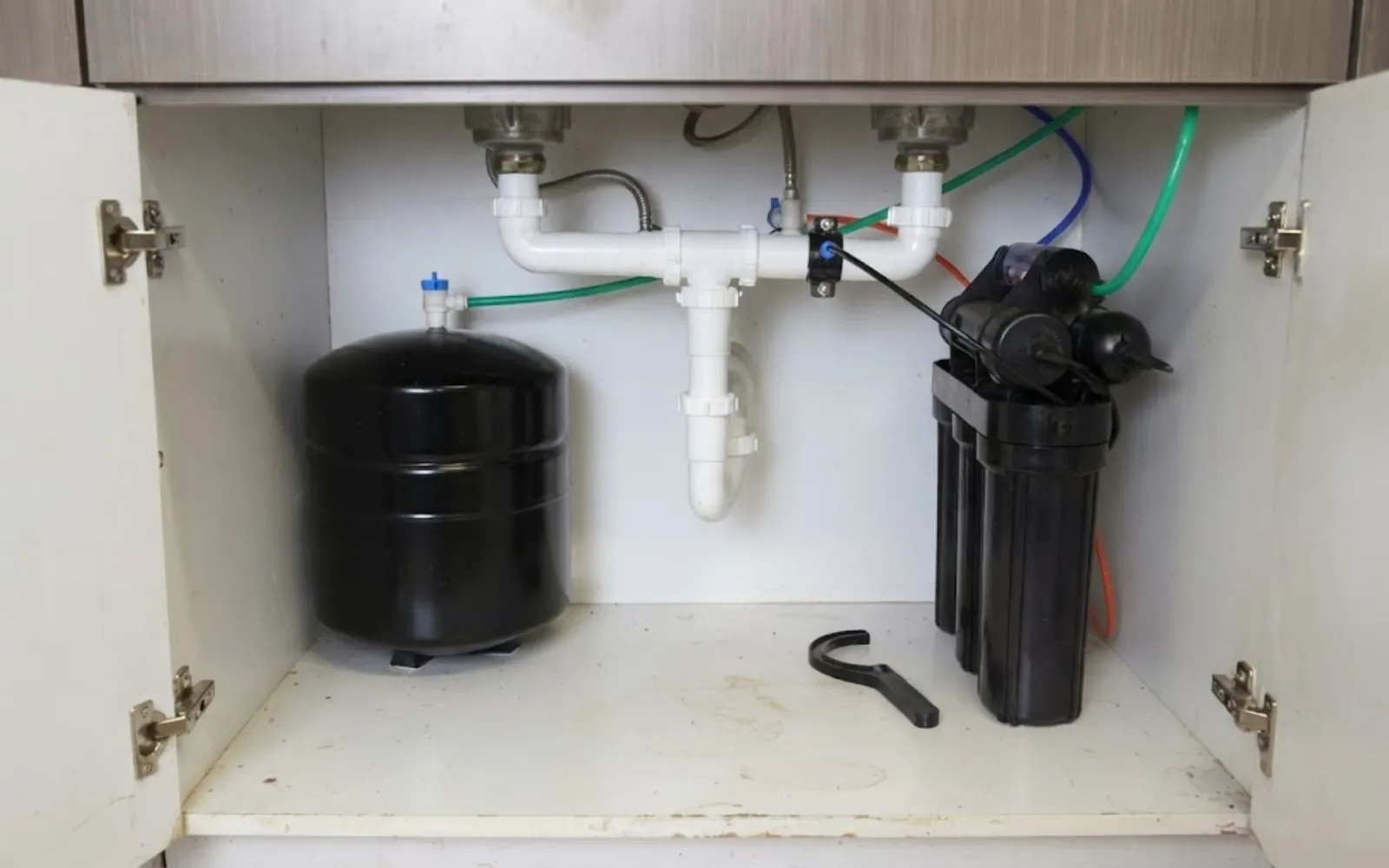
| Reverse osmosis. | Under the kitchen sink. | Drinking water: dissolved solids, byproducts, fluoride. | Slower flow, a small storage tank and wastewater. |
| Iron and sulfur filter. | Well systems, at the pressure tank. | Rust stains and rotten-egg smell. | Sized to the well test results. |
Choosing a filter: start with these questions
- City water or well? GRU water and well water have very different problems.
- What bothers you? Taste, smell, stains, scale or a specific contaminant each point to a different system.
- Whole house or just drinking water? A whole-house system treats showers and laundry too. An under-sink unit treats what you drink and cook with.
- Do you want fluoride kept or removed? Carbon filters generally leave it. Reverse osmosis removes most of it.
- Is there a water test? Always, for wells. For GRU customers, the annual water quality report is the starting point.
Well water in rural Alachua County
Private wells in the county draw from the same limestone aquifer as GRU, but without a treatment plant in between. Common complaints are hardness, iron that stains fixtures orange, and a sulfur smell from hydrogen sulfide. Bacteria testing matters too, especially after flooding.
A well system usually needs a test first, then a sequence: sediment filter, iron or sulfur treatment, a softener if the water is hard, and sometimes disinfection. Homes around High Springs and other rural areas can need several of those steps. If the pump or pressure tank is struggling, well pump repair comes first.
What installation includes
- Review the water. GRU's report or a well test, plus what you want to change.
- Size the system. Flow rate matters. An undersized whole-house filter lowers pressure at every tap.
- Install with a bypass. Filters can be changed or serviced without shutting off the house.
- Connect drains where needed. Reverse osmosis and backwashing filters need a proper drain connection.
- Flush and test. New media is flushed, and fittings are checked for leaks.
What affects filtration pricing
- Whole house or point of use. An under-sink system costs less than a whole-house setup.
- Water source. Well systems often need several stages.
- Flow requirements. Larger homes need higher-capacity equipment to keep pressure up.
- Ongoing maintenance. Cartridge and media replacement schedules vary by system.
Want your real number? Call (954) 697-4920. Installation estimates are free.
Filters and the rest of your plumbing
A sediment filter ahead of a softener or a tankless water heater protects them from grit, which is especially useful on wells. A reverse osmosis unit needs a spare connection under the sink, and older, stuck shutoff valves are often replaced at the same time as part of faucet and sink repair.
GRU annual water quality reports (treatment process, no violations, source water assessment). Hardness per the GRU water quality FAQ.
Water filtration questions
GRU's annual reports show its water meets all federal and state drinking water standards. Filtration is mostly about taste, smell and personal preference.
No. Carbon and sediment filters don't remove hardness. For scale, you need a softener.
Yes, most of it. If you want to keep fluoride in your drinking water, a carbon filter is the better choice.
Put the system in bypass or shut the main, then call. The line is answered 24/7.
It depends on the system and water use. Many carbon cartridges are changed every six to twelve months. We'll give you the schedule for the system installed.
Usually hydrogen sulfide, common in Florida wells. It's treatable with the right filter, and a water test confirms the level.