How to Protect Pipes From Freezing in Gainesville
The short answer
Pipes rarely freeze at exactly 32 degrees. The risk climbs when temperatures sit in the upper 20s for several hours, and it's serious in a hard freeze, which the National Weather Service describes as temperatures below about 23 degrees. Gainesville gets a few nights like that in some winters, sometimes as late as March.
On those nights, protect the pipes that are exposed: outdoor spigots, backflow preventers, well equipment, and supply lines in attics, garages and exterior walls. A thin stream of water from a few faucets does the rest.
How cold is too cold for pipes?
Forecast words matter here. These are the thresholds weather services and utilities use, and what each means for your plumbing.
| Forecast | What it means | What to do |
|---|---|---|
| Low around 32°F for an hour or two. | Frost on plants, pipes almost never freeze. | Disconnect hoses to be safe. |
| Freeze: 32 to 24°F for two hours or more. | Exposed outdoor piping is at risk. | Cover spigots and backflow preventers, wrap exposed pipe. |
| 28°F or colder for about four hours. | A common rule of thumb for when pipes start to freeze. | Add dripping faucets on outside walls. |
| Hard freeze: below about 23°F. | Attic, garage and exterior-wall lines at risk too. | Everything above, plus open cabinet doors and know your shutoff. |
Why Florida pipes freeze more easily than you'd expect
Houses up north are built to keep pipes warm. Houses here are built to stay cool. Supply lines often run through vented attics, unheated garages and exterior walls with thin insulation, and backflow preventers and well piping sit completely exposed outside.
That design is exactly right for most of the year. It's the wrong design for the handful of nights each winter when North Central Florida gets a real cold snap. Early 2026 was a good example, when record cold reached deep into Florida and burst pipes followed across the state.
Freezing itself doesn't usually break the pipe where the ice forms. Pressure builds between the ice plug and a closed faucet, and the pipe splits there. That's why a dripping faucet works: it gives the pressure somewhere to go.
The night before a hard freeze
- Disconnect every garden hose. A connected hose holds water against the spigot, and that's often what freezes first.
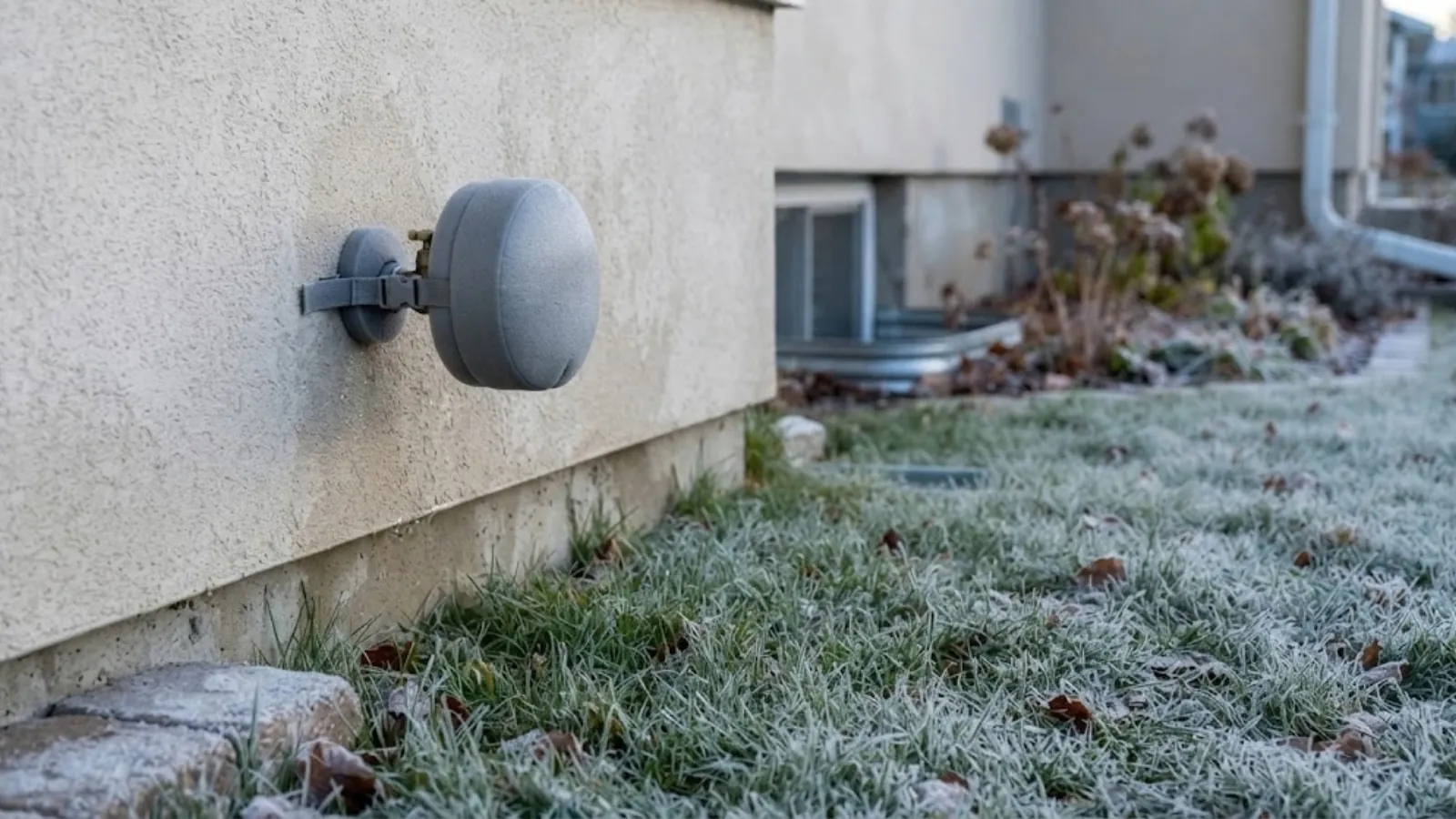
- Cover outdoor spigots. Foam covers from a hardware store are cheap. A towel and a plastic bag work in a pinch.
- Wrap the backflow preventer. The irrigation backflow assembly sits above ground, fully exposed. An insulated bag or blanket helps a lot.
- Wrap exposed pipes in the garage and at the well. Foam pipe sleeves, or towels secured with tape.
- Let a thin stream run from faucets on outside walls. A pencil-thin stream is better than a slow drip. Do both hot and cold if the lines run through the attic.
- Open cabinet doors under sinks on outside walls. It lets the house's warmth reach those pipes.
- Find your main shutoff now. If something does split, you want to know where it is before water is running.
- Turn off irrigation. Sprinklers running on a freezing night ice up heads, lines and sidewalks.
Homes on private wells need extra attention
Rural homes around the county often have the well head, pressure tank and piping in a small pump house or out in the open. That equipment is the first thing to freeze and the most expensive to lose, since without it the house has no water at all.
Wrap exposed well piping, close up any gaps in the pump house, and consider a small, safe heat source rated for the space. Letting a faucet run keeps water moving through the pump and tank too.
The morning after: if a pipe froze
- Open the faucet on the frozen line. So melting water has somewhere to go.
- Warm the pipe gently. A hair dryer, a heating pad or warm towels. Never an open flame.
- Watch for a split as water starts moving. A crack often doesn't leak until the ice melts and pressure returns.
- Shut the main at the first sign of a leak. Then call for repair.
- Check the backflow preventer and spigots. Look for cracks and spraying once water flows again.
If you can't find where a pipe is frozen, or it's inside a wall or ceiling, leave the thawing to a plumber. Heating a hidden line blindly can start a fire or cause a burst you can't reach.
Is it worth insulating permanently?
For most Gainesville homes, a few foam spigot covers, an insulated backflow cover and some pipe sleeves in the garage are enough. They cost little and go up in minutes the next time a freeze is forecast.
If the same attic or wall line has frozen more than once, a longer-term fix makes sense: better insulation around the run, a frost-proof spigot, or rerouting the line to a warmer space. Homes that have had a pipe burst in a freeze are also worth checking for weak spots in older pipe, since cold tends to find the weakest fitting first.
If something breaks anyway
Shut off the main valve and call. Professional burst pipe repair covers attic, wall, garage and outdoor lines. A cracked irrigation assembly is handled through backflow testing and repair.
If a freeze took out well piping or the pressure tank, submersible well pump repair gets the water back on. Rural homes around Archer and the rest of the county are the ones most likely to have exposed well equipment.
Prefer to talk it through? Call (954) 697-4920, answered 24/7.
Freeze and pipe questions
It's rarely necessary at 32. Start when the forecast calls for the upper 20s for several hours, or a hard freeze.
Cold is usually enough. If your supply lines run through the attic, dripping both hot and cold protects both.
Yes, but PEX tolerates freezing better than rigid pipe and is less likely to split. Protect it the same way.
A faucet that gives little or no water on a cold morning, frost on an exposed pipe, or a bulge in the pipe are all signs.
Shutting the main and draining the lines protects a house you're leaving empty. If you're staying home, dripping faucets is more practical.
Sudden water damage from a burst pipe is usually covered. Policies can exclude damage if a house was left unheated or unattended without reasonable care, so read yours.
According to: National Weather Service freeze and hard freeze definitions, 2026 Florida TV weather guidance on pipe-freeze thresholds (WFLX, WVUE), AccuWeather reporting on Florida's early 2026 cold, and Orange County Utilities freeze precautions.