How to Find Your Main Water Shutoff Valve
The short answer
In most Gainesville homes, the main shutoff valve is where the water line enters the house: often on an outside wall near a hose bib, in the garage, or near the water heater. Homes on a well shut off at the pressure tank and the pump's breaker.
Find it now, label it, and make sure it turns. In a burst-pipe emergency, the minutes spent searching are the minutes water spends soaking your floors.
Where to look first
Florida homes don't have basements, so the valve is usually above ground somewhere along the path from the meter to the house.
| Where | What it usually looks like | Common in |
|---|---|---|
| Outside wall facing the street. | A pipe rising from the ground with a valve, sometimes beside a hose bib. | Many slab homes. |
| Garage. | A valve on the pipe entering through the wall or slab. | Homes with the water heater in the garage. |
| Near the water heater. | The first valve on the incoming cold line. | Closet and garage installs. |
| Crawlspace or under the house. | A valve on the line right after it enters. | Older homes on raised foundations. |
| Pressure tank area. | A valve after the tank, plus the pump breaker. | Homes on private wells. |
If you can't find it anywhere, follow the line from the meter box toward the house. The valve is usually where that line comes out of the ground.
The valve you should use, and the one you shouldn't
There are usually two valves between the street and your faucets. The utility side sits at or next to the meter, inside the meter box. The house side is yours, at the point where the line enters the house.
Use the house-side valve. The meter valve belongs to the utility, can be hard to turn without a special key, and damaging it can create a bigger problem. If the house valve won't close in an emergency, tell the plumber on the phone and they'll help you decide what to do next.
How to close it safely
- Identify the valve type. A lever handle is a ball valve. A round wheel is a gate valve.
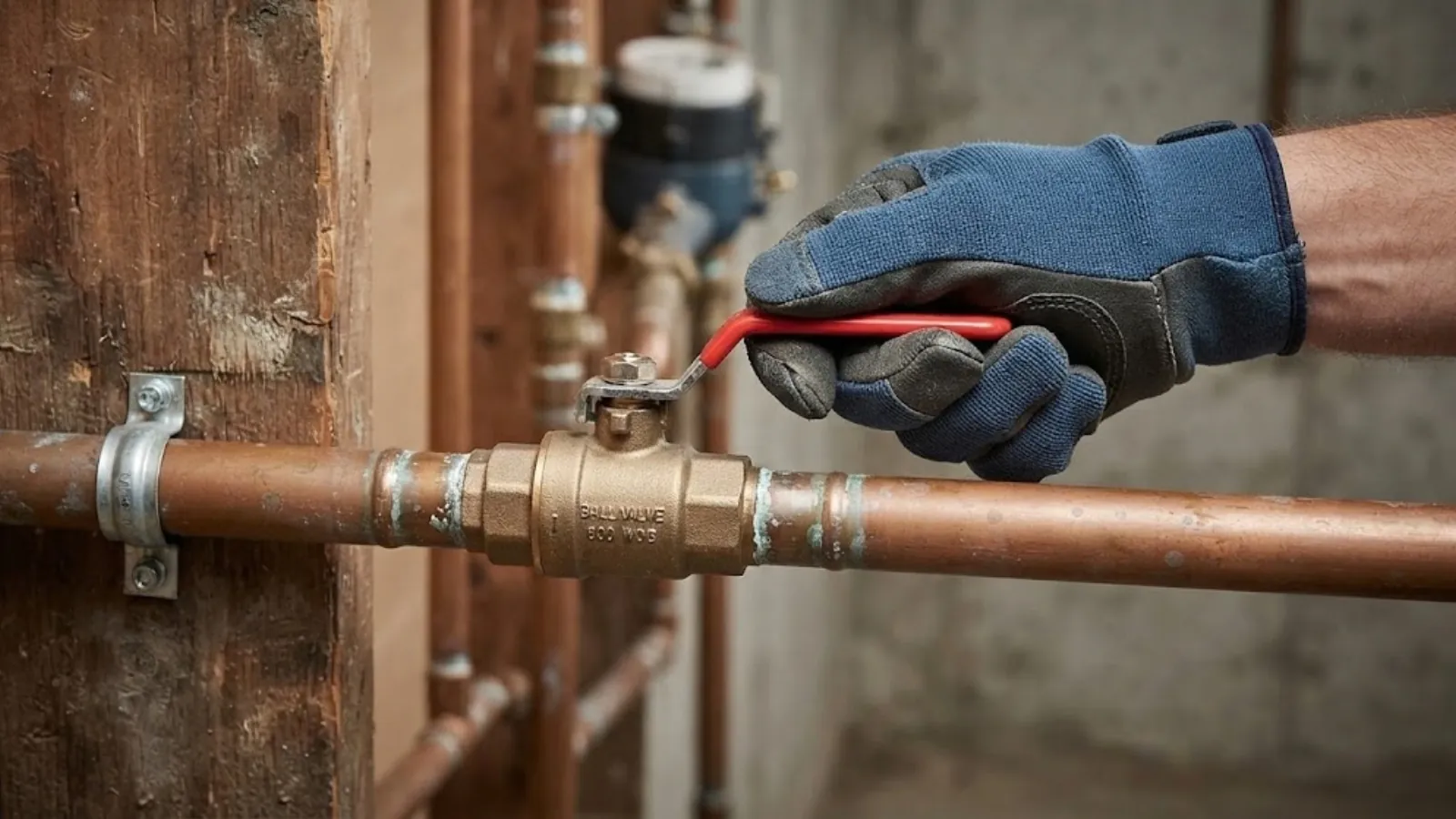
- Ball valve: turn the lever a quarter turn. Closed is when the lever sits across the pipe.
- Gate valve: turn the wheel clockwise. Keep turning until it stops. Don't force it past that.
- Open a faucet at the lowest point in the house. It drains pressure so a leak slows to a drip.
- If the leak is on the hot side, turn off the water heater. Breaker for electric, gas valve for gas.
Old gate valves: exercise them before you need them
Older homes often still have gate valves that haven't been turned in years. Mineral buildup from hard water can seize them, or the stem packing can start leaking the moment someone finally turns the wheel.
Turning the valve closed and open once a year keeps it working. If it's stuck, leaks when moved, or doesn't fully stop the water, have it replaced with a quarter-turn ball valve. It's a small job that pays off the first time a pipe breaks.
Set yourself up now
- Find the main and label it. A tag or bright paint so anyone in the house can find it.
- Show everyone in the household. Including teenagers and anyone who house-sits.
- Keep the area clear. No plants, storage or furniture in front of it.
- Find the fixture shutoffs too. Under sinks, behind toilets and at the water heater, so small leaks don't need the main.
- Know where the water heater's gas or breaker shutoff is. You'll need it for any hot-side leak.
- On a well, label the pump breaker. Shutting the pump off stops the system from refilling a leak.
Automatic leak shutoff valves
For homes that sit empty for stretches, or owners who travel, an automatic shutoff valve is worth considering. It's installed on the main line and closes on its own when sensors detect water on the floor or the system sees unusual flow, such as water running for hours.
Some connect to a phone app and let you close the main from anywhere. They don't replace knowing where the manual valve is, but they can stop a burst pipe hours before anyone gets home. Some insurers offer discounts for them, so it's worth asking yours.
What if you don't have a main shutoff?
Some older houses have no accessible house-side valve at all, or one buried under years of landscaping. That means the only way to stop water in an emergency is at the meter, which isn't ideal.
Adding a main shutoff where the line enters the house is a straightforward plumbing job, often done at the same time as other work on the service line or during a repipe. It's one of the most useful upgrades an older home can get.
If you need help
If water is already running, close what you can and call. Permanent burst pipe repair covers emergencies any hour. Replacing stuck fixture valves is part of faucet and sink repair, and adding or replacing the main valve is often done with water line repair.
Older homes near the historic downtown of High Springs and in Gainesville's historic districts are the most likely to have stiff or hard-to-find valves.
Prefer to talk it through? Call (954) 697-4920, answered 24/7.
Shutoff valve questions
Open a faucet inside. If the flow stops after a few seconds of draining, the valve is closed.
That valve belongs to the utility. Use the house-side valve whenever possible.
Don't force it with a wrench, which can break the stem. Call a plumber to replace it.
Usually a valve after the pressure tank. Also switch off the pump's breaker so it doesn't keep refilling.
For longer trips, closing the main is a simple way to limit damage if a pipe or appliance hose fails while you're gone.
Once a year is a good habit. Close it, confirm the water stops, then open it fully again.
It requires shutting water off at the meter and cutting into the main line, so most homeowners leave it to a plumber.
Call immediately and describe the valve. Open a faucet at the lowest point of the house to relieve pressure while you wait.
According to: general plumbing practice under the Florida Building Code, Plumbing, based on the International Plumbing Code (IPC), and GRU guidance that customer-side piping is the owner's responsibility.