Do You Need a Water Softener in Gainesville?
The short answer
You don't need one for safety, but many Gainesville homes benefit from one. GRU lists its water at about 140 mg/L of hardness, or 8.2 grains per gallon, which is hard even after the treatment plant's own softening step.
A softener makes the most sense if you have a tankless water heater, you're tired of scale on fixtures and glass, or you're on a private well, where hardness is often higher.
Doesn't GRU already soften the water?
Partly. GRU pumps its water from the Floridan aquifer, a limestone formation that loads groundwater with calcium and magnesium. At the Murphree Water Treatment Plant, the water goes through lime softening, recarbonation, filtration, fluoridation and disinfection.
Lime softening takes some hardness out, but not all of it. By GRU's own numbers, the water at your tap is still about 8.2 grains per gallon. Most water hardness scales call anything above about 7 grains hard, so Gainesville is solidly in that range.
It's also worth knowing what hard water isn't. It's not a health hazard, and GRU's annual reports show no drinking water violations. The case for a softener is about your plumbing, appliances and cleaning, not safety.
Who benefits most, and who can skip it
| Your situation | Softener value | Why |
|---|---|---|
| Tankless water heater. | High. | Scale in the heat exchanger is the main cause of tankless problems. |
| Private well. | High. | Well water often runs harder than city water, sometimes with iron. |
| Constant scale on glass, fixtures and dishes. | High. | A softener stops the buildup at the source. |
| Tank heater that needs frequent flushing. | Moderate. | Less sediment settles in the tank. |
| Renting, or moving within a year or two. | Low. | Hard to justify the install. |
| Mostly concerned about taste. | Low. | A filter, not a softener, handles taste and chlorine. |
Signs hard water is costing you
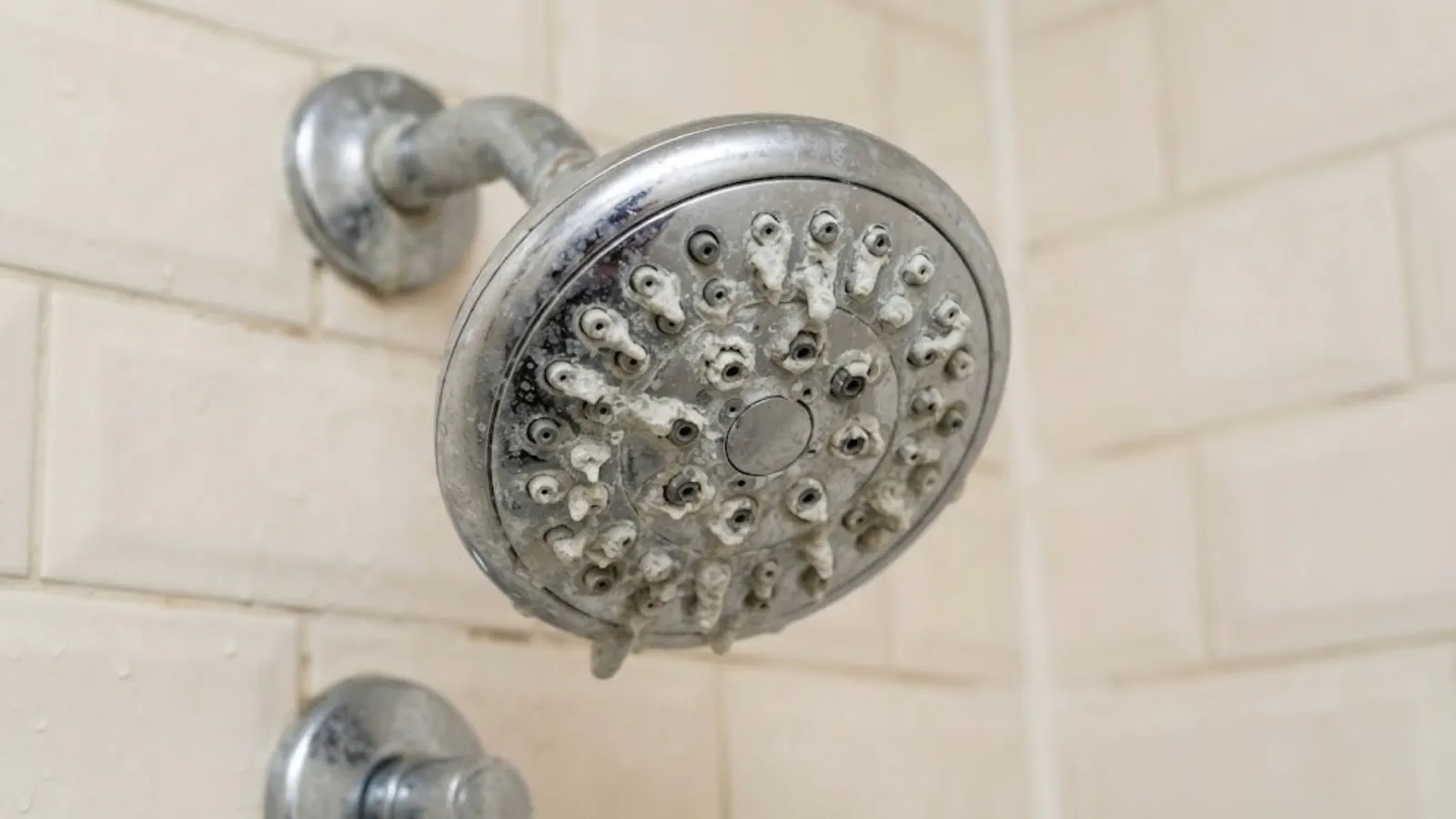
- White crust on showerheads and faucets. That's scale, and there's more inside the fixtures where you can't see it.
- Spots on dishes and glass shower doors. Minerals left behind as water evaporates.
- A tank heater that rumbles or pops. Sediment on the tank bottom.
- A tankless unit throwing errors or cold bursts. Scale restricting the heat exchanger.
- Stiff faucet handles and weak flow. Scale in cartridges and aerators.
What a softener does, and what it doesn't
A salt-based softener passes water through resin beads that trade calcium and magnesium for sodium or potassium. The beads are recharged with brine every so often, which is why you add salt.
At Gainesville's hardness level, the sodium added is small, and potassium chloride can be used instead of salt. If you'd rather not drink softened water, a reverse osmosis filter at the kitchen tap takes it out.
A softener doesn't remove chlorine taste, sediment or most contaminants. That's filtration. It also isn't the same as a salt-free conditioner, which changes how minerals behave but leaves them in the water.
What owning one actually involves
The ongoing costs are modest but real: salt or potassium, a little extra water during regeneration, and occasional service. The resin bed often lasts many years, and the control valve is the part most likely to need repair or replacement along the way.
Day to day, the main job is keeping the brine tank at least a third full and breaking up any crust that forms across the salt. After a power outage, check that the clock on a timer-based unit is still right, or it will regenerate at the wrong time.
Against that, you're buying slower wear on your water heater, fixtures and appliances, and a lot less time scrubbing scale off glass and tile.
Well water is a different calculation
Private wells across rural Alachua County draw from the same limestone aquifer as GRU, without a treatment plant in between. Hardness is often higher, and iron, sediment and a sulfur smell are common too.
A softener alone may not be enough on a well. The usual order is a sediment filter first, iron or sulfur treatment if the test calls for it, then the softener. Skipping the test and buying a softener first is a common way well owners end up with equipment that doesn't solve the problem.
Before you buy one
Test first. GRU publishes its hardness, but a quick test at your own tap confirms it, and a well needs a full test for hardness, iron and sulfur before choosing equipment.
Size it to the house. A unit that's too small regenerates constantly and wastes salt and water. One that's far too large costs more than it needs to. Metered, on-demand valves regenerate based on actual use and usually use less salt.
Plan the spot. Most go in the garage near where the main line enters, with room for the brine tank, a drain connection with a proper air gap, and a bypass valve for service.
Next steps
If the answer for your house is yes, water softener installation covers testing, sizing and installation. If your main complaint is taste or smell, whole-house water filtration is the better fit, and many homes use both.
Tankless owners seeing errors should also schedule tankless water heater service, since a softener prevents new scale but doesn't remove what's already there. Homes on wells around High Springs and other rural parts of the county should start with a water test.
Prefer to talk it through? Call (954) 697-4920, answered 24/7.
Water softener questions
Yes. GRU lists it at about 140 mg/L, or 8.2 grains per gallon, which falls in the hard range.
Yes for most people. If you're on a sodium-restricted diet, use potassium chloride or a reverse osmosis filter at the kitchen tap, and ask your doctor.
It depends on the unit, the hardness and your household size. Many homes add a bag or two a month.
Not for hardness. Carbon and sediment filters don't remove calcium and magnesium.
Not directly. It can reduce wear on water heaters and fixtures, which lowers repair and replacement costs over time.
Usually in the garage near where the main line enters, with space for the brine tank, a drain connection and a bypass valve.
Yes, but test first. Wells often have iron, sediment or sulfur too, which may need a filter ahead of the softener.
No. It stops new scale from forming. Existing buildup on fixtures needs cleaning, and a tankless heater needs a descale.
According to: GRU water quality FAQ (140 mg/L, 8.2 grains per gallon) and GRU annual water quality reports (treatment process, no violations). Drain air gap rules from the Florida Building Code, Plumbing, based on the International Plumbing Code (IPC).