Sewer Line Replacement in Gainesville, FL
Sewer line replacement puts in a new lateral from the house to the sewer connection or septic tank, instead of patching one spot in the old one. It's the right call when the camera shows damage along most of the line, or when the old pipe is a material that fails everywhere at once.
Replacement is planned work. If the old line has collapsed and sewage is backing up today, the phone is answered 24/7 and the first job is getting the house usable again.
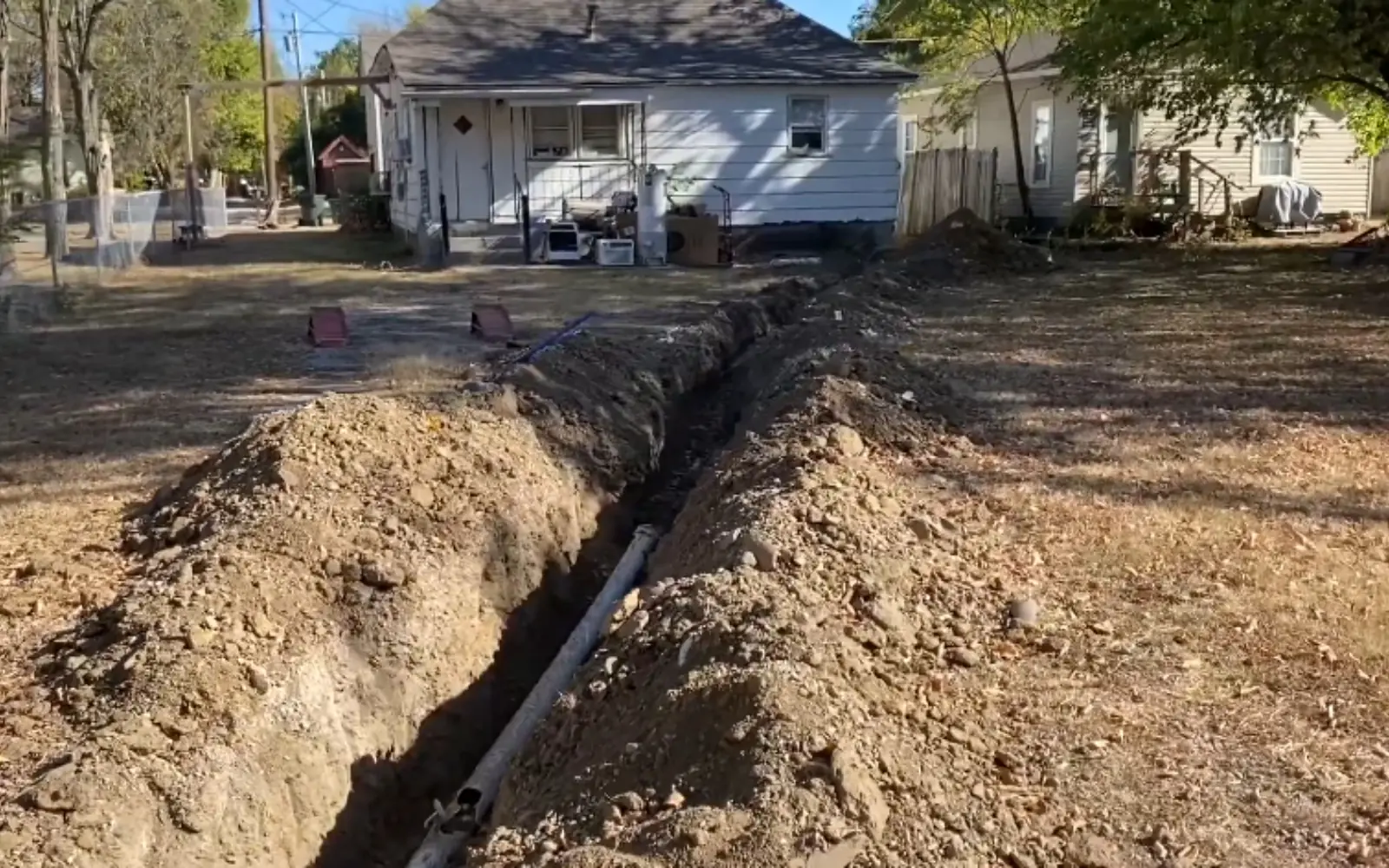
When replacement beats another repair
One crack or one root entry is a repair. The math changes when a camera run shows problems every few feet: several offset joints, a long sag, heavy corrosion along the bottom of a cast iron pipe, or roots at joint after joint. Paying for spot repairs on that line means paying again for the next section soon.
Material matters too. Fiber pipe, sold under names like Orangeburg and used in some homes from the 1950s into the early 1970s, softens and flattens with age. There is no reliable way to repair it in pieces. When the camera finds it, replacement is almost always the recommendation.
If the camera shows only one or two defects, lateral sewer line repair is the better value, and we'll say so.
Three ways to replace a sewer lateral
| Method | How it works | Best when | Trade-off |
|---|---|---|---|
| Open trench. | Dig along the line, remove the old pipe, lay new PVC to proper slope. | Open yard, sags that need re-grading, collapsed pipe. | Most yard disruption. |
| Pipe bursting. | A head pulled through the old pipe breaks it outward while new pipe follows behind. | Under driveways, trees and hardscape, with a consistent pipe path. | Needs two access pits and a fairly straight run. |
| Cured-in-place lining. | A resin-soaked liner is inflated inside the old pipe and hardens into a new pipe. | Pipe is cracked but still holds its shape. | Can't fix a sag, slightly reduces diameter. |
Trenchless methods save lawns, driveways and tree roots. They can't correct a line that has sunk out of slope, though. A belly needs digging to fix properly.
Old laterals in Gainesville's older neighborhoods
Homes in the Duckpond, Pleasant Street and University Heights districts can be carrying laterals that are 70 years old or more, commonly clay tile or cast iron. Big oaks along these streets have had decades to find every joint. Many of these lines work until the day a root mass closes them.
Replacing a lateral under a heritage-size tree needs care. Pipe bursting or lining avoids cutting through major roots, which protects the tree and saves the cost of tearing up a mature yard.
In rural areas east of the city, out toward Hawthorne, many homes send waste to a septic tank instead of a sewer main. The pipe between the house and the tank ages the same way and gets replaced the same way.
How a replacement project runs
- Camera and measure. Video of the full line, with depth and distance marked.
- Pick the method. Trench, bursting or lining, based on the pipe, the yard and the budget.
- Permit and locates. A plumbing permit from the city or county, and a Sunshine 811 request so buried utilities are marked.
- Replace the line. Most residential laterals are replaced in one to two days.
- Add a cleanout. If the house doesn't have an accessible outdoor cleanout, this is the time to add one.
- Inspect and restore. The inspector checks the new line and slope before backfill, then the yard is graded back.
Getting ready for replacement day
- Plan for limited water use. Toilets and drains are out of service while the line is being connected, usually several hours.
- Mark sprinkler heads and invisible fence wires. Utility locates won't show your private lines.
- Move vehicles if the line runs under the driveway. Access pits may sit near it even on trenchless jobs.
- Tell us about any tree you want protected. It can change the method we recommend.
What drives the cost of sewer line replacement
- Length and depth. Longer, deeper runs take more time and material.
- Method. Trenchless methods cost more in equipment, open trench costs more in restoration.
- What's above the line. Driveways, patios and mature trees change the approach.
- Connection point. Tying into the public main or a septic tank inlet adds different work.
- Permit and inspection fees. Set by the jurisdiction.
Many homeowners policies exclude underground pipe that failed from age. A service line endorsement, if you have one, may help.
Want your real number? Call (954) 697-4920. Replacement estimates are free and come with the camera footage.
Buying an older home?
A standard home inspection usually doesn't include the sewer line. For a house built before the 1980s, a full sewer camera inspection before closing can reveal a replacement-level problem while it's still a negotiating point.
If a new line is going in, it's worth checking the rest of the drain system at the same time. Stubborn grease in the kitchen branch, for example, is a job for hydro jetting before the new lateral is connected.
Permits per Alachua County and City of Gainesville building offices. Dig-safe locates under Florida's Underground Facility Damage Prevention and Safety Act (Sunshine 811). Work follows the Florida Building Code, Plumbing, based on the International Plumbing Code (IPC).
Sewer line replacement questions
The line is answered 24/7. We'll clear what we can and set up temporary flow if possible. Full replacement follows once permits and locates are in place.
Not always. It costs more in equipment, but it can save thousands in driveway, patio or landscaping repair. On an open lawn, a trench can be the lower-cost option.
Properly installed PVC is expected to last for many decades, with none of the joint problems of clay or the corrosion of cast iron.
A continuous liner has no joints for roots to enter along its length. Roots can still reach the ends, where the liner meets old pipe, so those transitions are sealed carefully.
Yes. Replacing a sewer lateral is permitted plumbing work, through the City of Gainesville or Alachua County depending on the address, and it's inspected before backfill.
A pipe made of wood fiber and tar, used in some homes from the 1950s into the early 1970s. It deforms and collapses as it ages and is almost always replaced rather than repaired.