Tree Roots in Your Sewer Line: Signs and Fixes
The short answer
Tree roots get into sewer lines through small gaps at pipe joints, then grow into a mat that catches waste. The classic sign is a main line that clogs, gets cleared, and clogs again a few weeks or months later.
Cutting the roots restores flow, but they grow back. The lasting fix is sealing the entry point, with a spot repair, a liner or, if the pipe is failing everywhere, a new line.
How roots get in
Tree roots don't break into a sound pipe. They find the tiny gaps that already exist. Older sewer laterals in Gainesville are often clay tile or cast iron, laid in short sections with joints every few feet. Over decades, settling soil opens those joints slightly, and warm, moist air and a trickle of water escape.
Roots grow toward that moisture. A hair-thin root enters the joint, finds a steady supply of water and nutrients, and thickens. Within a few years it can fill much of a four-inch pipe.
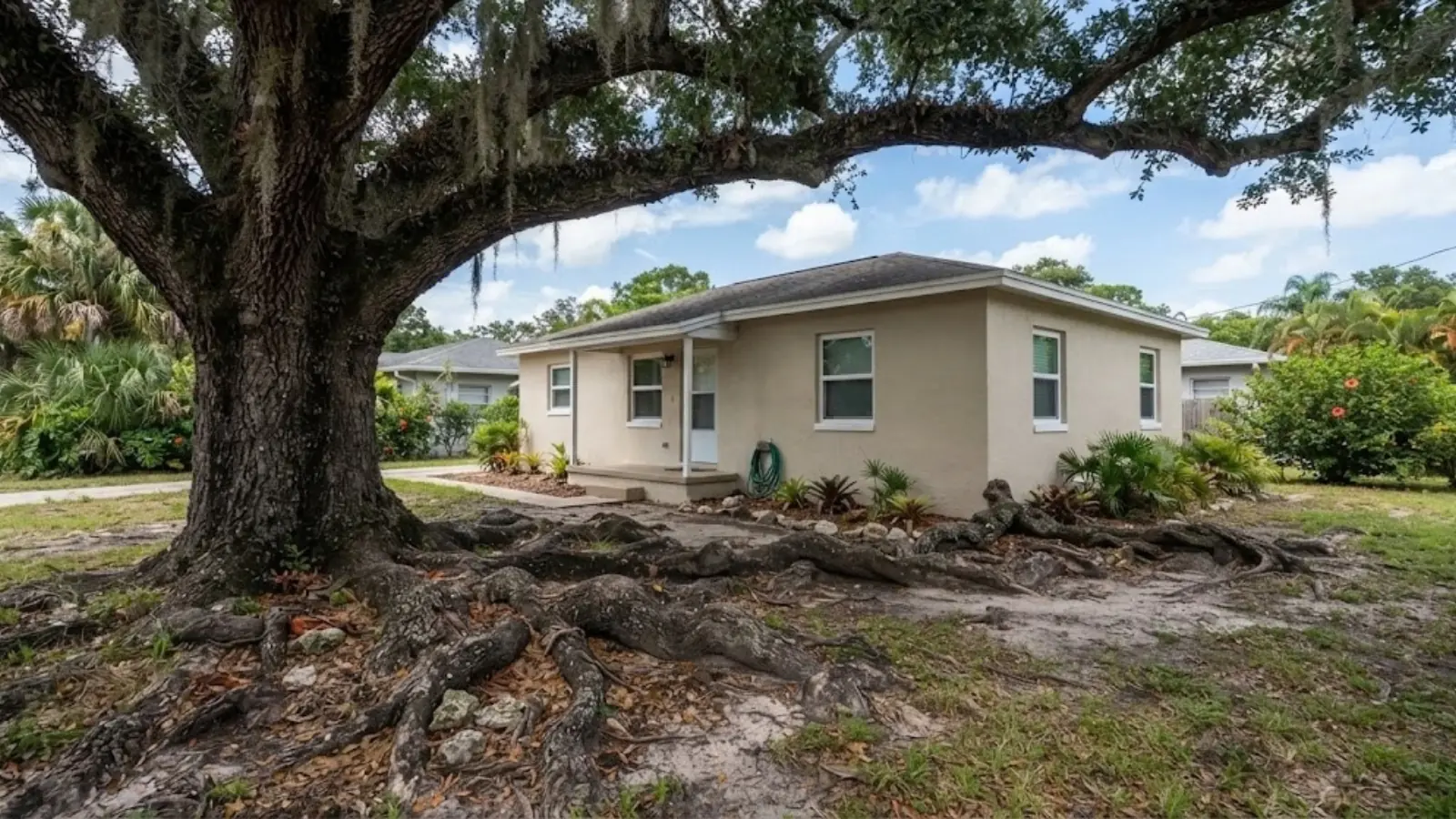
That's why root problems cluster in the city's older, tree-lined neighborhoods. Big oaks in and around the Duckpond, Pleasant Street and University Heights have had generations to find every joint in the laterals beneath them.
Signs roots are in your line
- The main line clogs again and again. It clears after cabling, then slows down within weeks or months.
- Gurgling toilets and slow drains all over the house. The restriction is past where the branch lines join.
- A cable comes back with roots on it. The most direct sign there is.
- A sewer smell or a soggy, extra-green patch in the yard. Wastewater leaking out where roots opened a joint.
- A big tree within reach of the line. Not proof by itself, but it raises the odds.
The fixes, from quickest to most permanent
| Fix | What it does | How long it lasts |
|---|---|---|
| Cable (snake) with a cutting head. | Cuts a path through the roots. | Until they grow back, often months. |
| Hydro jetting. | Scours roots back to the pipe wall. | Longer than cabling, but roots still return. |
| Chemical root treatment. | Slows regrowth after cleaning. | Varies. Doesn't seal the gap. |
| Spot repair at the joint. | Replaces the section where roots enter. | Permanent at that joint. |
| Pipe lining. | Seals the pipe from inside with no joints for roots. | Long-term along the lined length. |
| Line replacement. | New pipe, usually PVC with tight joints. | Long-term for the whole line. |
Why root problems often show up after a dry spell
Roots go where the water is. During a long dry stretch, the steady moisture leaking from a sewer joint becomes one of the most reliable water sources in the yard, and roots grow toward it faster.
North Central Florida swings between soaking summer storms and dry spells, so a line that was fine in the rainy season can start clogging after a dry spring. If your line has a history of roots, clearing it ahead of a dry season is cheaper than clearing it during a backup.
What changes the cost of fixing a root problem
Cleaning is priced by access and effort: an outdoor cleanout and light roots are quick, while a dense root mass reached through a toilet takes longer. Repairs are priced by depth, what's above the pipe, and how many joints need attention.
Lining and replacement cost more up front but end the cycle of repeat cleanings. Comparing a few years of cleaning bills with the cost of sealing the line is usually the clearest way to decide.
See it before you choose
The right fix depends on how many joints the roots have found and what shape the pipe is in. A sewer camera shows exactly that, and marks each problem's depth and distance from the house.
One root entry in otherwise healthy clay is a spot repair. Roots at joint after joint, or a pipe that's cracked and sagging, points toward lining or replacement. Camera footage also tells you whether jetting is safe, since high pressure can finish off pipe that's barely holding together.
What about the tree?
You rarely need to remove a tree to fix a root problem. Once the entry point is sealed, the roots have no reason to go back into the pipe. Cutting major roots to dig a trench, on the other hand, can harm or destabilize a large tree.
That's one reason trenchless methods, like lining or pipe bursting, are popular under mature oaks. They leave the root zone mostly undisturbed.
If you're planting, keep large trees well away from the sewer line's path, and choose smaller species near the house.
What you can do meanwhile
- Keep wipes and grease out of the line. They catch on roots and turn a partial blockage into a full one.
- Know where your cleanout is. It makes every cleaning faster and keeps the mess outside.
- Schedule cleaning before it backs up. If your line clogs every spring, clear it before then.
- Don't rely on store-bought root killers alone. They can slow regrowth but won't fix the gap roots came through.
Clearing roots and fixing the entry point
Start with a full sewer camera inspection to see where the roots are. Hydro jetting clears them back to the pipe wall, and lateral sewer line repair seals the joint they came through.
Older homes near downtown Alachua and in Gainesville's historic districts are the most likely to have clay or cast iron laterals under mature trees.
Prefer to talk it through? Call (954) 697-4920, answered 24/7.
Tree root questions
Yes, if the entry point isn't sealed. Cleaning buys time. Repair or lining stops it.
Products labeled for sewer root control are designed for it when used as directed. Follow the label, and don't expect them to fix a cracked or open joint.
It's much less common. Modern PVC joints are tight, so roots have little to get into. Most root problems are in clay, cast iron or fiber pipe.
It depends on how fast the roots grow back. Many homes settle into a yearly cleaning until the joint is repaired.
Often not, since it's treated as wear and gradual damage. Some policies offer a service line endorsement.
Yes. A sewer camera inspection shows roots at joints long before they cause a backup.
Large, fast-growing trees with aggressive roots near the line cause the most trouble. Distance matters more than species.
According to: common drain-cleaning practice and pipe material behavior under the Florida Building Code, Plumbing, based on the International Plumbing Code (IPC). Neighborhood details per City of Gainesville historic preservation survey reports.