Sinkhole or Slab Leak? Telling Them Apart in Gainesville
The short answer
Most new cracks in a Gainesville home are ordinary settling or the result of a water leak, not a sinkhole. A leaking line under or near a slab can wash sand into gaps in the limestone below, and the symptoms can look similar. So the first step is always to rule out a leak with a simple meter test.
If the meter is still and cracks keep widening, doors start sticking, or a depression appears in the yard, that's when to bring in a geotechnical engineer and call your insurer.
Why this question comes up so often here
Alachua County sits on karst, limestone that slowly dissolves as slightly acidic groundwater moves through it. The Cody Scarp, an old shoreline, runs through the Gainesville area. Southwest of it, the Ocala Limestone lies just a few feet under the sand. Northeast of it, a thicker blanket of clay covers the rock.
Devil's Millhopper, a sinkhole about 120 feet deep, sits inside the city. In October 2020, a sinkhole near NW 13th Place widened past 100 feet and spread across four properties over two months, with a county geologist measuring it most days.
Events like that make headlines, which is why any new crack can feel alarming. In practice, water is a far more common reason for ground movement under a house, and water is the part you can fix.
Side by side: slab leak signs vs. sinkhole warning signs
Some signs overlap. The ones in the middle column point most strongly to plumbing, and the ones in the right column point to the ground.
| Sign | Points toward a slab leak | Points toward sinkhole activity |
|---|---|---|
| Water meter. | Moves with every fixture off. | Normally still. |
| Floor. | Warm spot, damp flooring, lifting tile. | Cracks in tile that grow quickly across a room. |
| Walls and doors. | Stains near baseboards. | Doors and windows suddenly sticking or not latching. |
| Yard. | Soggy strip along a line's path. | A circular depression or sudden hole. |
| Outside structures. | Usually unaffected. | Fence posts, trees or utility poles tilting. |
| Sound. | Hissing or running water at night. | Usually none. |
What to do first, in order
- Run the meter test. Turn off every fixture and watch the meter's low-flow dial for ten minutes. Movement means water is escaping.
- Check for a warm spot or a running sound. Both point strongly to a supply leak under the slab.
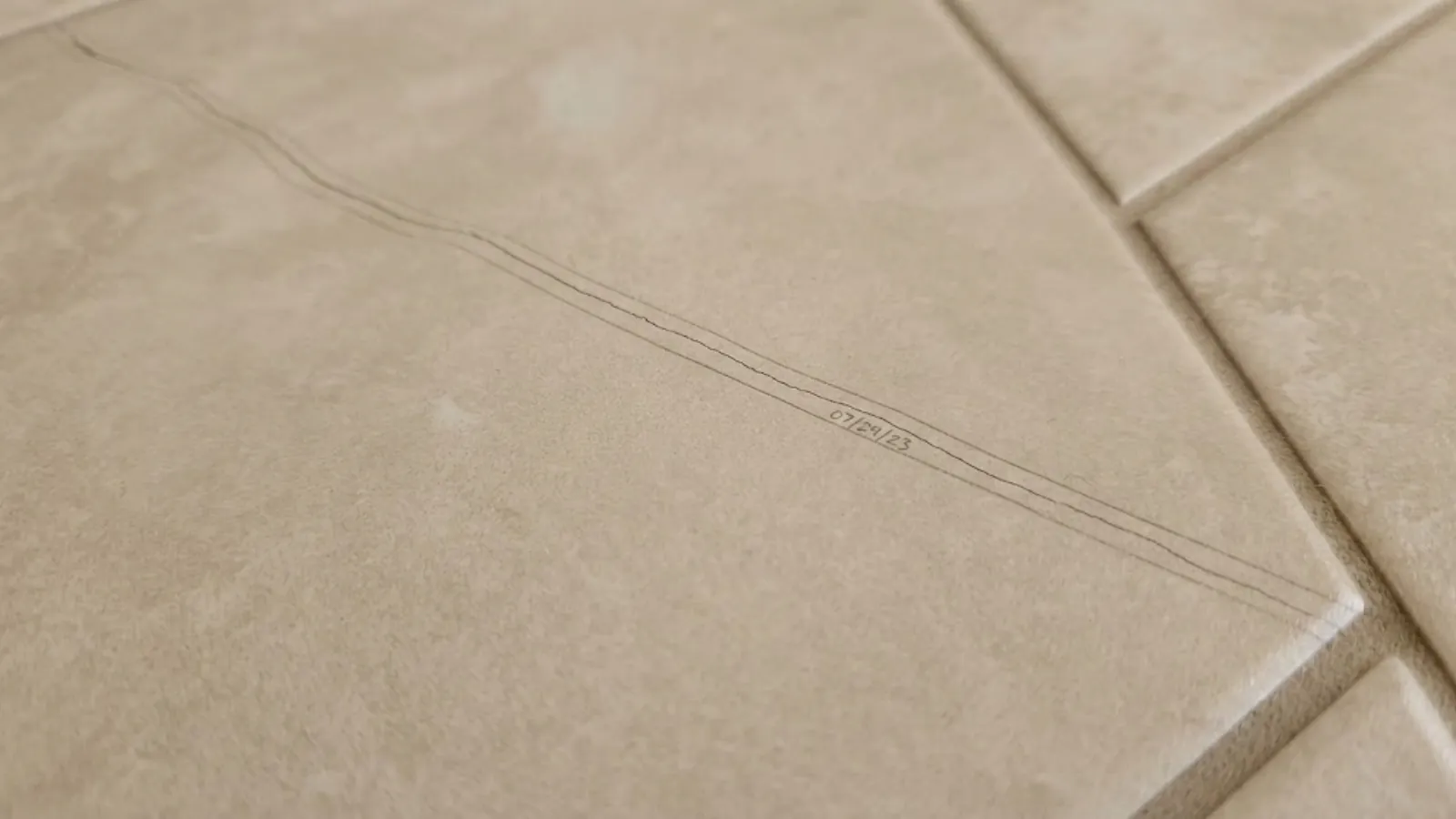
- Mark the cracks. Draw a pencil line at each end of every crack and write the date beside it. Growth over weeks is the key question.
- Photograph everything. Inside and outside, with dates, before anything is repaired.
- Fix any leak you find. It stops the washout. Then keep watching the marked cracks.
- Call a geotechnical engineer if cracks keep growing. Especially if doors stick, the yard sinks or nothing leaked.
What to do if a hole opens in the yard
Keep people and pets well away from it, since the edges can keep collapsing. Don't fill it yourself with dirt or debris. If it's close to the house, a road or a utility line, or the house shows sudden new damage, call 911 and leave the structure until it's checked.
Then call your insurer. In Alachua County, the Environmental Protection Department has geologists who track sinkhole activity, and your insurer will arrange its own professional testing if you file a claim.
How Florida insurance treats each
The difference matters a lot for your claim. A slab leak is a plumbing event. Many Florida homeowners policies cover access to a sudden leak and the water damage it caused, but not replacing the pipe itself.
Sinkholes fall under a separate section of Florida law. Insurers must cover catastrophic ground cover collapse, a narrow category that generally requires an abrupt collapse, a visible depression, structural damage and the home being condemned and ordered vacated. Broader sinkhole coverage is usually an optional add-on. Sinkhole claims also involve testing by qualified professionals, such as engineers or geologists.
Because of that, a documented leak with a repair invoice is a very different claim from a suspected sinkhole. Ruling out the leak first keeps your claim clear and avoids paying for ground testing you didn't need.
Lowering the risk around your own house
- Fix leaks promptly. Leaking supply and sewer lines are a common local cause of soil washout under slabs.
- Send roof water away from the foundation. Downspouts that dump next to the slab concentrate water right where you don't want it.
- Watch irrigation. A zone that runs too long or leaks near the house saturates the same soil.
- Don't ignore a sinking spot in the lawn. Small depressions are worth a look before they grow.
Clay ground is a different story
East of the city, toward Hawthorne, thicker clay covers the limestone. Large sinkholes are less common there, but clay swells when wet and shrinks when dry, and that movement cracks slabs and stresses the pipes inside them. The advice is the same: rule out a leak first, then watch whether the cracks keep growing.
Ruling out the leak
Slab leak detection and repair finds a leak under the concrete with pressure tests and electronic locating, before any floor is opened. If you can't tell where water is going at all, electronic leak detection tests the whole system, and a leak in the yard is handled by water line repair.
Homes on the clay side of the county, around Hawthorne, see the shrink-and-swell version of the same problem.
Prefer to talk it through? Call (954) 697-4920, answered 24/7.
Sinkhole and slab leak questions
A leak can wash sand into existing gaps in the limestone and cause a local depression or settling. That's different from a geological sinkhole, but it's a good reason to fix leaks quickly on karst ground.
Alachua County has real, documented sinkhole activity, especially on the west side where limestone is close to the surface. Most houses never have one, and most cracks have other causes.
If there's any sign of a leak, start with the plumbing, since it's quicker and cheaper to rule out. If there's no leak and cracks keep growing, call a geotechnical or structural engineer.
Policies must cover catastrophic ground cover collapse, which is narrowly defined. Broader sinkhole coverage is usually optional. Check your declarations page.
It varies. Marking crack ends with a date lets you see whether they're growing over weeks, which is the most useful information you can give an engineer.
According to: Florida Statutes section 627.706 (sinkhole and catastrophic ground cover collapse coverage), WUFT reporting on the 2020 Gainesville sinkhole, Devil's Millhopper Geological State Park, and regional geotechnical guidance on the Cody Scarp and Alachua County soils.