Signs of a Slab Leak in a Gainesville Home
The short answer
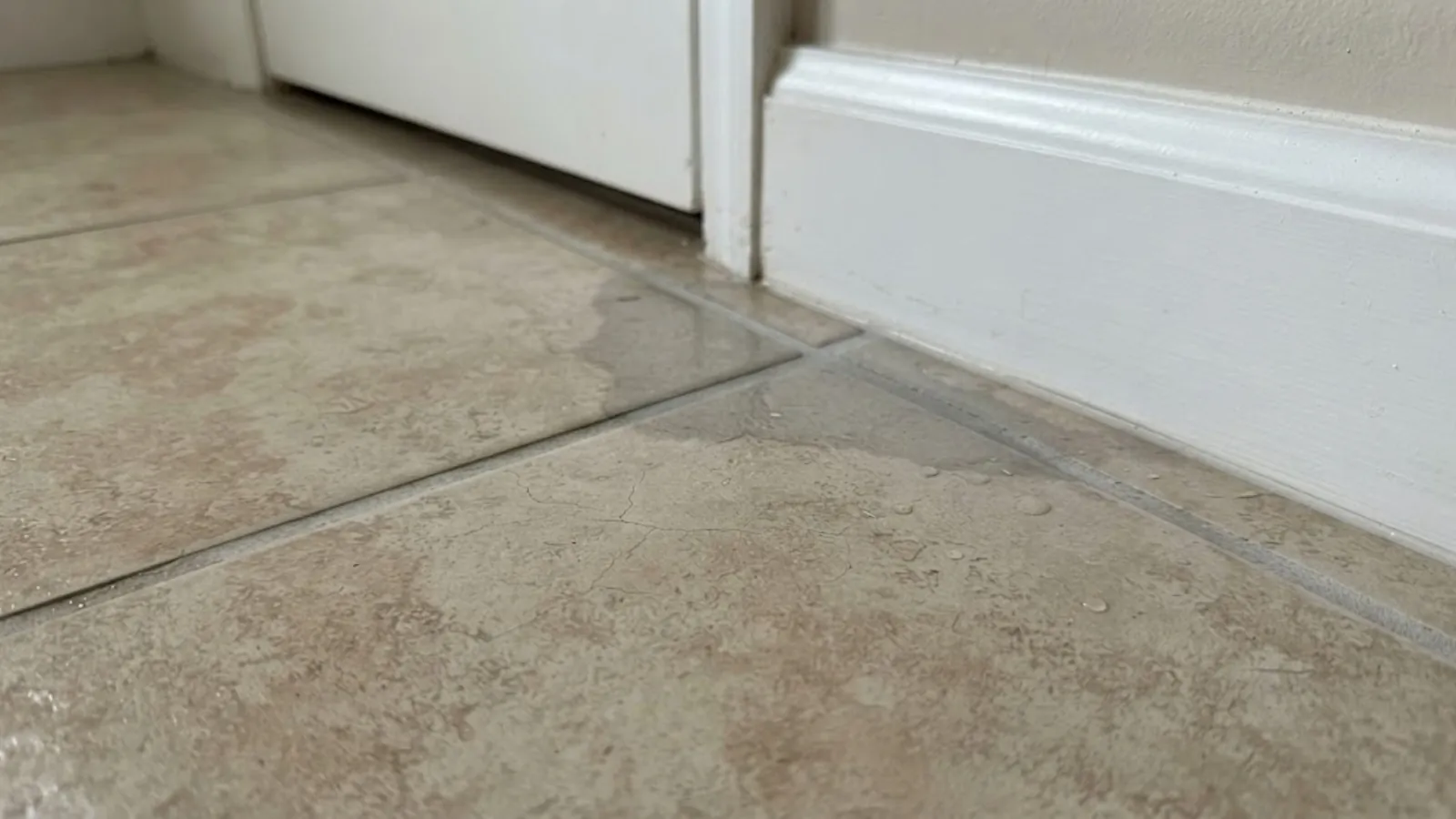
The most reliable signs of a slab leak are a warm spot on the floor, the sound of running water with everything off, a water meter that keeps moving, and damp flooring or baseboards with no obvious source. In Gainesville, slab homes built from the 1960s through the 1980s are the most likely to have one.
No single sign proves it. Two or three together, in a slab house of that age, are a strong reason to have the leak located before anything is cut.
What a slab leak actually is
Many Florida houses sit directly on a concrete slab, with no crawlspace underneath. In homes built through the 1980s, the water supply lines often run through or under that concrete, usually copper. A slab leak is a break in one of those buried lines.
Because the pipe is under concrete, the water has nowhere obvious to go. It soaks into the soil, wicks up into flooring, or travels along the pipe to show up somewhere unexpected. That's why the signs are often indirect, and why they get missed for weeks.
Sign by sign: what it points to
| What you notice | What it suggests | How strong a sign |
|---|---|---|
| Warm or hot patch on tile or concrete. | A hot water line leaking under that spot. | Strong. |
| Hissing or running sound with every tap off. | A pressurized line escaping somewhere under the floor. | Strong. |
| Meter moving with every fixture off. | A leak somewhere past the meter. | Strong, but could also be the yard line. |
| Water heater running when nobody uses hot water. | Hot water escaping, possibly under the slab. | Moderate. |
| Damp carpet pad, cupping wood, lifting tile. | Water wicking up through the concrete. | Moderate. |
| Musty smell near a wall or cabinet base. | Slow moisture, from a slab line or a nearby fixture. | Weak on its own. |
| New cracks in floors or walls. | Possible soil washout, or ordinary settling. | Weak on its own. |
Why Gainesville slabs are prone to leaks
Two things work against slab plumbing here. The first is the ground. West and southwest Gainesville sit on sand over shallow limestone, where soil can settle unevenly over years.
East toward Hawthorne, thicker clay swells when wet and shrinks when dry. Either way, a rigid copper line cast into concrete gets bent a little every season.
The second is age and water. A slab home from the 1970s has had copper carrying GRU water, at roughly 8.2 grains per gallon of hardness, for 50 years. Where the pipe rubs against rebar, gravel or the concrete itself, the wall thins until it pinholes.
Newer homes in the area are less likely to have this problem, since many route supply lines through the attic instead of the slab.
What to do if you suspect a slab leak
- Run the meter test. Turn off every fixture, then watch the meter's low-flow dial for ten minutes. Movement means water is escaping.
- Close the house shutoff and check again. If the dial stops, the leak is inside the house, and the slab is a real possibility. If it keeps moving, suspect the yard line first.
- Check for a hot spot. Walk the floors barefoot, especially near the kitchen, bathrooms and water heater.
- Turn off the water heater if the floor is warm. It limits how much hot water keeps escaping while you wait.
- Photograph everything. Damp flooring, the meter and any cracks, with dates, for insurance.
Slab leak or sinkhole?
Cracks in a Gainesville slab can raise a scarier question, since Alachua County does have real sinkhole activity. Most cracks are ordinary settling. A leaking water line is actually one of the common reasons soil washes out under a slab, so if cracks show up with any sign of a leak, find the leak first.
If cracks keep growing after a leak is repaired, that's when to bring in a geotechnical or structural engineer.
What insurance usually covers
Many Florida homeowners policies treat a slab leak in three parts. Getting to a sudden leak, called tear-out or access, is often covered. The water damage it caused is often covered. Replacing the pipe itself usually isn't, because the policy treats that as maintenance.
Slow leaks that ran for weeks can be denied, which is one more reason to act on the signs above quickly. Call your carrier early, keep the detection report, and photograph the damage before the floor is closed back up.
What not to do
- Don't start breaking up the floor to look. A located leak needs an opening about the size of a dinner plate. A guess can mean a trench across the room.
- Don't ignore a warm spot because the bill looks normal. A small hot-side leak can run for weeks before it shows up on a bill.
- Don't assume insurance will pay for everything. Florida policies often cover access to a sudden leak and the damage, but not replacing the pipe itself. Read yours.
Getting the leak found and fixed
Once you've seen two or three of these signs, slab leak detection and repair is the next step. The leak is located with pressure tests, listening equipment and thermal imaging, then you choose between a direct repair, a reroute through the walls, or a larger repipe.
If the meter test pointed to the yard instead, buried water line repair covers the buried line from the meter. And if you can't tell where it's coming from at all, professional leak detection tests the whole system. Homes on the clay side of the county, like those in Hawthorne, see the same problem from shrinking and swelling soil.
Prefer to talk it through? Call (954) 697-4920, answered 24/7.
Slab leak questions
No. A pressurized line keeps leaking until it's repaired, and the hole usually grows.
It depends on the size of the break. Even a small pinhole on a pressurized line runs around the clock, which is why it shows up on a water bill.
If water is pooling on the floor or you can't shut it off, yes. A small leak with the main valve closed can usually wait for daylight.
Less common. Many newer homes run supply lines through the attic, where a leak shows up as a ceiling stain instead.
Not usually. The repair itself is a small, patched opening. Ongoing leaks can wash out soil, which is why finding them early matters.
You can do the meter test and check for warm spots. Pinpointing the location takes pressure testing and listening or thermal equipment.
According to: regional geotechnical guidance on Alachua County soils (sand over limestone to the southwest, clay cover to the northeast), GRU water quality FAQ (hardness), and WUFT reporting on the 2020 Gainesville sinkhole.