How Much Does It Cost to Repipe a House in Gainesville?
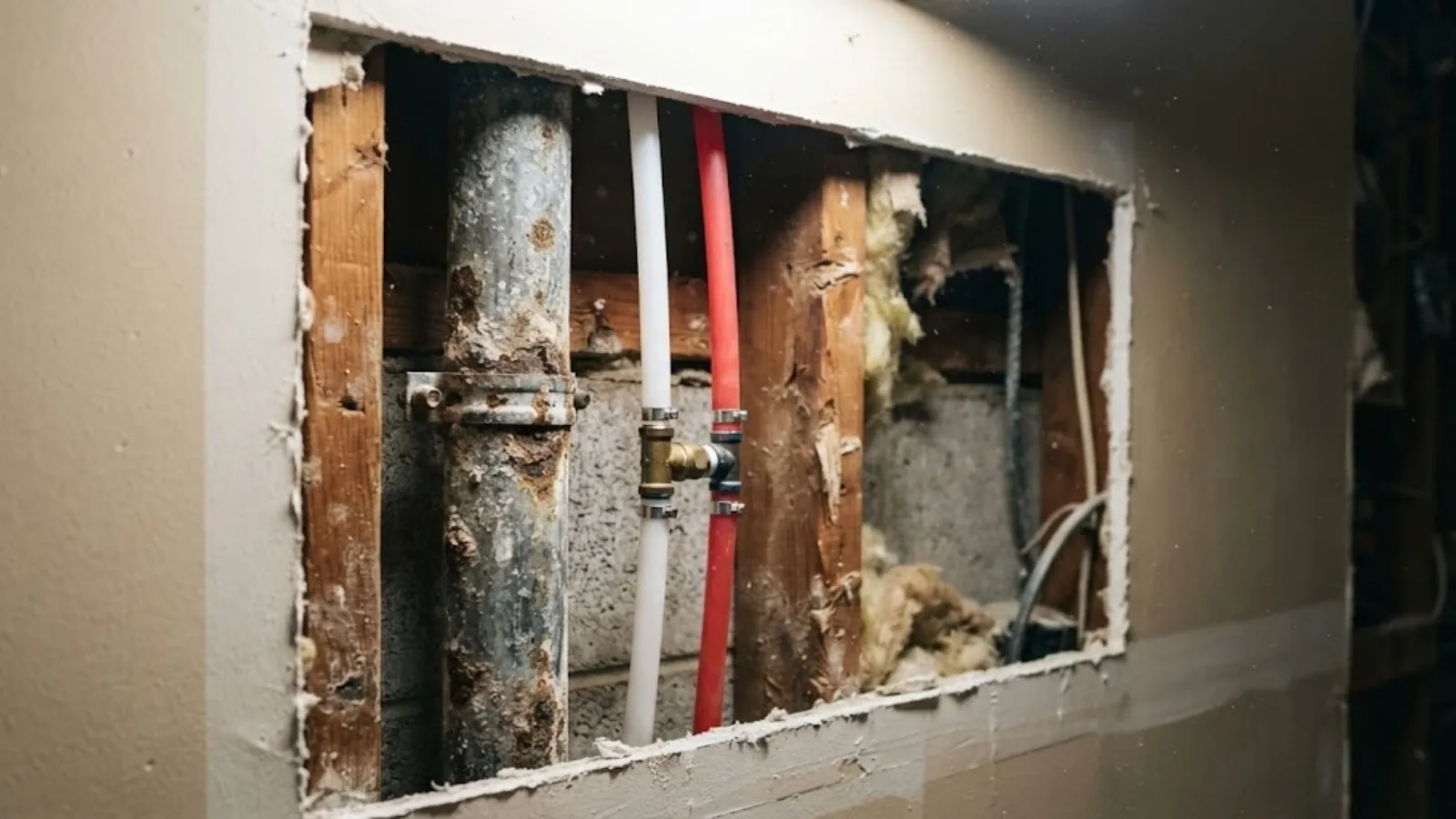
The short answer
Published Florida cost guides from 2026 put a typical whole-house repipe at roughly $4,000 to $15,000, with smaller homes and PEX pipe at the low end and large homes, copper pipe and difficult access at the high end.
Your real number depends on how many fixtures the house has, what the walls are made of, whether pipe runs through a slab or a crawlspace, and the permit. The only way to know is a walkthrough, which should be free.
What moves the price most
Two houses of the same size can get very different quotes. These are the reasons why.
| Factor | Pushes the price down | Pushes the price up |
|---|---|---|
| Number of fixtures. | One or two bathrooms. | Three or more bathrooms, wet bar, outdoor kitchen. |
| Pipe material. | PEX. | Type L copper. |
| Access. | Open attic or crawlspace. | Slab home with finished walls and ceilings. |
| Wall finish. | Drywall. | Plaster, tile or paneling. |
| Stories. | Single story. | Two stories. |
| Extras. | Supply lines only. | New shutoff valves, water heater, service line from the meter. |
PEX or copper for a Gainesville repipe
Most Florida repipes today use PEX, a flexible plastic pipe. It needs fewer fittings, snakes through walls with fewer openings, and handles hard water well. Florida cost guides generally put it well below copper in total job cost.
Copper is the traditional choice and some owners prefer it for resale or personal preference. It costs more in material and labor and needs more wall openings. Both are code-approved when installed correctly.
CPVC is also approved, but it grows brittle with age and attic heat, so it's rarely the first choice for a whole-house job now.
Historic homes vs. slab homes
Gainesville has two very different repipe customers. Pre-war houses in the Duckpond, Pleasant Street and University Heights often sit on raised foundations, so a crawlspace gives open access to most supply runs. The challenge is plaster walls and original trim that owners want left alone, which means more careful routing and patching.
Slab homes from the 1960s through the 1980s are the opposite. There's no crawlspace, so new lines go overhead through the attic and down interior walls, and the old slab pipe is abandoned. More drywall openings, but no jackhammering.
What a fair repipe quote should include
- Every fixture listed. Sinks, toilets, tubs, showers, the washer, the ice maker and outdoor spigots.
- The pipe material and brand. So you can compare quotes on the same basis.
- The permit. Replacing a plumbing system requires one, through the City of Gainesville or Alachua County depending on the address.
- Wall patching. Whether drywall repair is included, and whether paint is.
- New shutoff valves. Replacing old valves at every fixture during a repipe costs little and prevents future trouble.
- The timeline. Most single-family repipes take a few working days.
Is a repipe worth it, or should you keep patching?
One pinhole leak in otherwise healthy copper is a repair. The math changes with a second or third leak in a short span, with any polybutylene in the system, or with galvanized pipe that has already closed up and killed your water pressure.
At that point, each repair buys a little time on pipe that will need replacing anyway. Some Florida insurers also ask about pipe type when quoting a policy, and polybutylene or galvanized can make coverage harder to get. A repipe removes that question.
It's also the natural moment to replace an aging water heater, since the water is already off and the new lines can run straight to the new unit.
Which pipe do you have now?
The pipe already in the house is the biggest clue to whether a repipe is coming. You can usually tell in a few minutes, looking where the main line enters, near the water heater and under sinks.
- Gray, sometimes blue or black, flexible plastic stamped PB2110. Polybutylene, common in Florida homes from the late 1970s to the mid-1990s. It fails at the fittings, often without warning.
- Dull gray metal with threaded joints. Galvanized steel, common before about 1960 and in the historic districts. It rusts shut from the inside.
- Reddish-brown metal with soldered joints. Copper. Often fine for decades, but repeat pinholes mean the wall is thinning.
- Cream or tan rigid plastic. CPVC. Watch for brittleness and cracked fittings in attic runs.
- Red, blue or white flexible plastic. PEX, usually from a newer build or a past repipe.
If you find polybutylene or galvanized anywhere in the supply system, plan for a repipe even if nothing is leaking yet. It's cheaper on your schedule than on the pipe's.
What the job looks like, start to finish
- Walkthrough and quote. Every fixture is mapped and the route is planned.
- Permit pulled. Before any pipe is cut.
- New lines run alongside the old. So the house keeps water most of each day.
- Cutover day. Fixtures switch to the new system and it's pressure tested.
- Inspection, then patching. The inspector checks open work before walls are closed.
Getting a real number for your house
A walkthrough is the only way to price a repipe honestly. Whole-home repiping explains the process, and if you're not sure the pipe is the problem, leak detection confirms it first.
If the old line from the meter to the house is the same age, water line replacement is priced separately so you can decide on each. Older homes out in Alachua get the same walkthrough and the same honest comparison.
Prefer to talk it through? Call (954) 697-4920, answered 24/7.
Repipe cost questions
Rarely, since a repipe replaces aging pipe rather than repairing sudden damage. It may make the house easier to insure afterward.
Most single-family homes take a few working days, plus inspection. Water is usually back on each evening.
Yes. PEX is approved under the Florida Building Code when installed correctly.
Sometimes, for a remodel. If the rest of the house has the same failing pipe, partial repipes usually lead to another job soon after.
Different materials, different fixture counts, and whether patching and the permit are included. Compare line by line.
Usually not. Most families stay home, with water back on each evening. Cutover day is the one day to plan around, since water is off for most of it.
If the house has polybutylene or galvanized supply pipe, buyers' inspectors and insurers will likely flag it. Replacing it first can remove an objection, but get a quote and compare it with the likely price negotiation.
According to: 2026 Florida repipe cost guides published by Angi, Cornerstone Plumbing, Positively Plumbing and others (typical ranges). Permit requirement per Alachua County building permits. Pipe approval under the Florida Building Code, Plumbing, based on the International Plumbing Code (IPC).